



By Mumo Judah, June 9, 2026
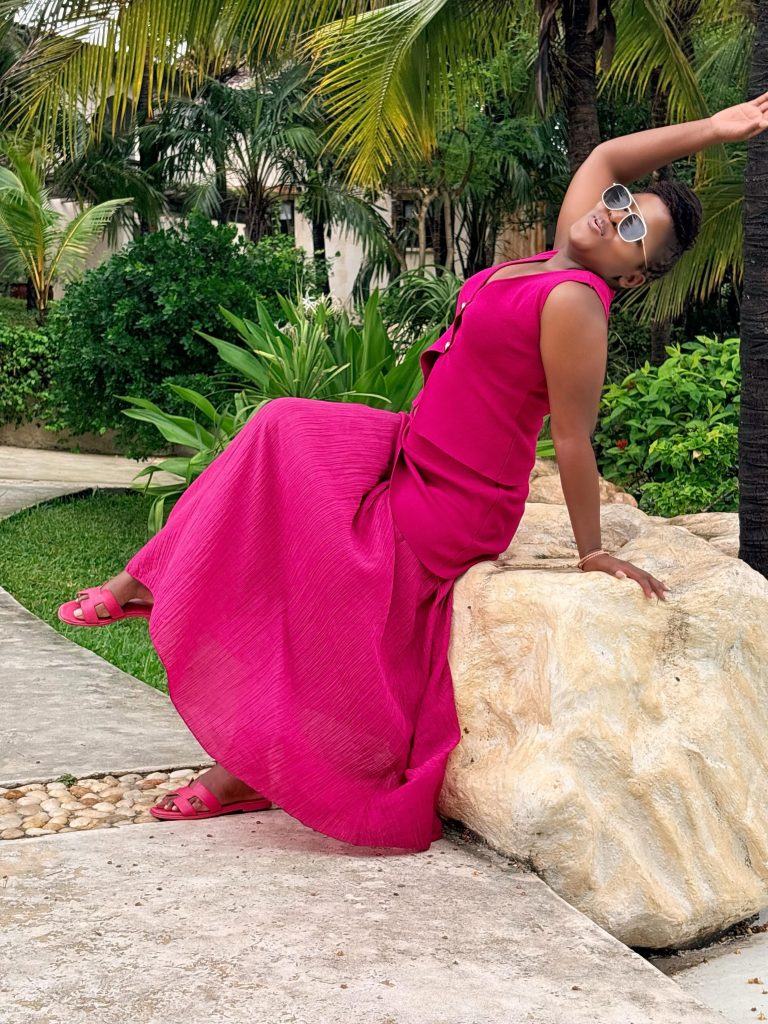
Celebrated Kenyan fashion stylist and actress Wanjiku Stephens has reflected on her career journey, revealing how she transitioned from professional modelling to becoming one of the most influential behind-the-scenes creatives in Kenya’s television and fashion industry.
Stephens said her early exposure to fashion and performance as a child played a key role in shaping her career path, eventually guiding her into modelling, styling, and later acting. She noted that her experience on the runway helped her develop a deeper understanding of garment structure, movement, and visual storytelling, which later became central to her work as a stylist.
Before gaining recognition in television production, Stephens first built her career in front of the camera as a professional model, working on various fashion assignments that introduced her to the wider creative industry. She said the transition from modelling to styling was a natural progression driven by her growing interest in how visual narratives are constructed behind the scenes.
One of the defining chapters of her career, Stephens revealed, was her long-term collaboration with media personality Lulu Hassan. She worked closely with Hassan’s production company, Jiffy Pictures, for seven consecutive years as the lead fashion stylist, helping shape the visual identity of some of Kenya’s most popular television dramas.
During this period, Stephens played a central role in designing wardrobes and styling characters for hit telenovelas such as Maria, Zora, and Sultana, productions that have enjoyed massive viewership across the country and beyond. Her work contributed to the distinct on-screen aesthetics that helped define a new era of locally produced television drama.
Stephens said the experience not only strengthened her creative portfolio but also cemented her reputation as a key figure in Kenya’s entertainment styling industry.
Beyond styling, she later expanded her career into acting, taking on on-screen roles that further demonstrated her versatility in the creative arts. She said the shift into acting allowed her to better understand the full production process from both creative and performance perspectives.
“I have always believed in growth and reinvention. Every stage of my career has built on the previous one,” Stephens said in reflecting on her professional journey.
Today, she continues to work within the creative industry while also mentoring upcoming talent, with a strong focus on encouraging professionalism in fashion styling and costume design. She has also been vocal about the need to formally recognize styling as a key technical and creative profession within Kenya’s film and television sector.
Stephens’ journey from runway modelling to influential stylist and actress highlights the expanding opportunities within Kenya’s creative economy, where cross-disciplinary talent continues to shape the future of entertainment and visual storytelling.