


By Erestinah Jane, July 13, 2026
An American aid worker who tested positive for the Bundibugyo strain of the Ebola virus while serving in the Democratic Republic of Congo (DRC) will not be evacuated to Kenya for treatment, easing concerns over the controversial U.S.-backed isolation facility under construction at the Laikipia Air Base in Nanyuki.
U.S. authorities confirmed that Kenya is not being considered for the patient’s medical evacuation, explaining that the proposed 50-bed isolation facility at the Nanyuki military base is not yet complete. Instead, the aid worker is expected to be airlifted to a specialized medical facility in Frankfurt, Germany, where advanced treatment and isolation capabilities are available.
The patient, a logistics worker with the humanitarian organization Samaritan’s Purse, is currently receiving care in isolation at a treatment centre in the DRC as arrangements for the international medical evacuation are finalized.
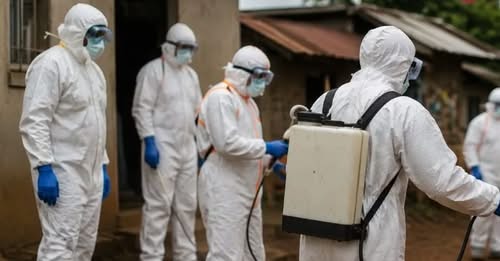
Health officials said the patient contracted the rare Bundibugyo strain of the Ebola virus, one of the less common but highly dangerous variants of the disease. The ongoing outbreak has reportedly resulted in more than 1,800 infections and over 600 deaths across eastern Democratic Republic of Congo and neighbouring Uganda. Unlike the more common Zaire strain, there is currently no approved vaccine or specific treatment for the Bundibugyo variant, making containment and supportive medical care critical.
The announcement has temporarily eased public anxiety in Kenya, particularly in Laikipia County, where plans to establish a U.S.-supported Ebola isolation facility at the Laikipia Air Base have generated widespread controversy.
The proposed facility forms part of a broader U.S. investment of approximately Sh1.9 billion (US$14.5 million) aimed at strengthening Kenya’s preparedness against Ebola and other infectious diseases. The project is intended to enhance disease surveillance, laboratory capacity, emergency response systems and quarantine infrastructure for Americans and other individuals potentially exposed to Ebola in the region.
However, the proposal sparked strong opposition from residents of Nanyuki and surrounding areas, who expressed fears that the isolation centre could expose local communities to dangerous infectious diseases. Demonstrations against the project turned violent, resulting in casualties and prompting legal action.
The High Court subsequently issued conservatory orders temporarily halting construction of the facility pending the determination of a case challenging the project’s implementation and its potential public health implications.
With the American aid worker now set to receive treatment in Germany instead of Kenya, attention is expected to remain focused on the future of the Nanyuki isolation facility and the government’s broader strategy for strengthening the country’s preparedness against cross-border disease outbreaks.