



By Tobby Kalume | July 17, 2026
U.S. President Donald Trump has accused China of orchestrating what he described as the “largest compromise of election data in history,” alleging that newly declassified documents reveal widespread vulnerabilities in the United States’ election system.
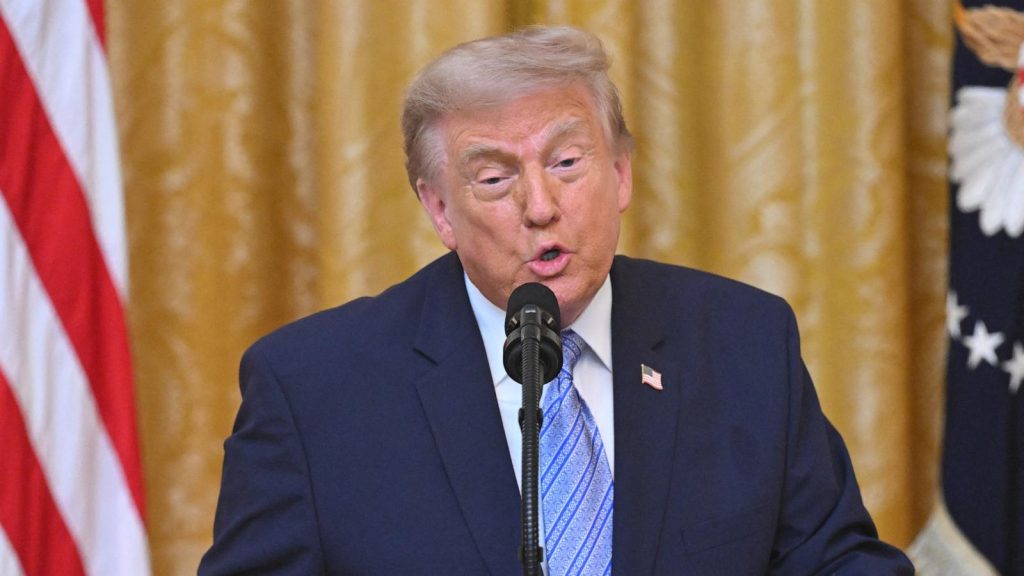
Speaking during a 27-minute primetime address from the White House, Trump claimed that Beijing had unlawfully obtained voter registration data involving approximately 220 million Americans across 18 states during the 2020 election cycle.
The President further alleged that electronic voting machines and ballot-counting systems remain vulnerable to hacking and manipulation, arguing that the country’s election infrastructure falls well below acceptable security standards.
Trump also accused what he termed a “shadow government” and “rogue bureaucrats” within the U.S. intelligence community of concealing the alleged security threats from him during his first term in office. He said he had directed federal agencies to investigate those involved and pursue disciplinary action, including possible prosecutions where warranted.
As part of his proposed response, Trump urged Congress to pass the SAVE America Act, legislation that would introduce stricter voter identification requirements and mandatory proof of U.S. citizenship for voter registration. He argued that the measures are necessary to strengthen election integrity and prevent non-citizens from appearing on voter rolls.
However, Trump’s claims have been strongly disputed by lawmakers, intelligence officials and election security experts.
Critics, including Senate Intelligence Committee Vice-Chair Mark Warner, noted that the voter registration databases referenced by the President consist largely of public records that can legally be accessed or purchased from state authorities. They argued that access to voter registration information does not constitute evidence of election manipulation.
Fact-checkers also said Trump did not present evidence showing that votes were altered, deleted or manipulated during the 2020 presidential election.
The allegations also contradict findings by the U.S. Cybersecurity and Infrastructure Security Agency (CISA) and a declassified 2021 Intelligence Community Assessment, which concluded that China did not interfere with the technical administration or voting processes of the 2020 election.
The address sparked political controversy, with several major U.S. television networks reportedly declining to air the speech live on their primary platforms. Trump criticized the decision and threatened action against broadcasters he accused of suppressing his message.
China also rejected the allegations. A spokesperson for the Chinese Embassy reiterated Beijing’s longstanding position of non-interference in the internal affairs of other countries and described the U.S. election as a domestic matter.
Political analysts say the address is likely to intensify debate over election security and voting reforms as the United States prepares for the 2026 midterm elections, with the issue expected to remain a central feature of the country’s political discourse.