


By Ibrahim Jodia | March 24, 2026
The concept of a “geological scandal” continues to define Africa’s paradox—immense natural wealth coexisting with persistent poverty and instability. Nowhere is this contradiction more evident than in the Democratic Republic of the Congo (DRC), a country widely regarded as one of the richest territories on earth in terms of natural resources, yet plagued by decades of conflict and humanitarian crises.
As the global economy transitions toward clean energy, the DRC has once again become a focal point of intense geopolitical competition. Major world powers are increasingly drawn to its vast reserves of critical minerals, often engaging in exploitative practices that mirror historical patterns of resource extraction.
The roots of this crisis can be traced back to the colonial era under King Leopold II, who in 1885 turned the Congo into a personal enterprise for rubber and ivory extraction. His regime led to the deaths of millions through forced labor, violence, and systemic brutality. Under the Force Publique, entire communities were subjected to impossible production quotas, with severe punishments including executions and village burnings for failure to comply.
International outrage, driven by activists such as E. D. Morel and Roger Casement, eventually forced Belgium to annex the territory in 1908, ending Leopold’s direct control but not the exploitation.
Following independence in 1960, Patrice Lumumba emerged as a symbol of national sovereignty. As the country’s first Prime Minister, Lumumba sought to reclaim control of the nation’s resources. However, his stance during the Congo Crisis and alignment with external powers during the Cold War made him a target. He was overthrown in a coup led by Mobutu Sese Seko and later assassinated in 1961, an event widely seen as a turning point that derailed the country’s democratic trajectory.
Today, the DRC’s mineral wealth estimated in the trillions remains both a blessing and a curse. The country holds over 70% of the world’s cobalt, a key component in batteries for smartphones and electric vehicles. Despite this, much of the population continues to live in poverty.
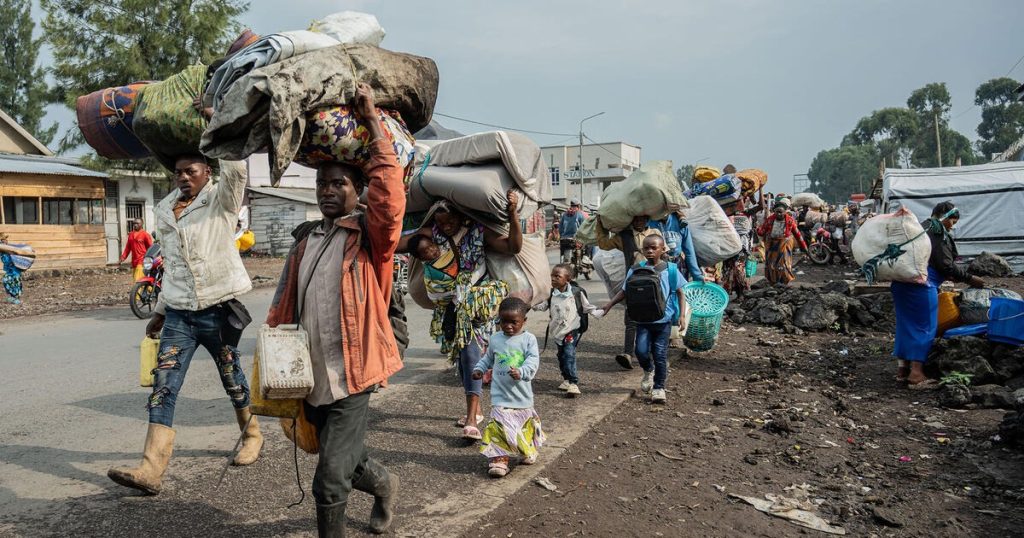
The eastern region of the country remains unstable, with over 120 armed groups, including M23, operating in a complex web of conflict fueled by ethnic tensions, historical grievances, and competition over resources. This instability has created a thriving black market for minerals such as coltan, gold, and cobalt, often referred to as “blood minerals.”
Global powers continue to compete for influence. China has secured significant control over mining operations through infrastructure-for-resources deals, while Western nations are attempting to reassert their presence through strategic projects like the Lobito Corridor. Meanwhile, regional actors such as Angola, Zimbabwe, and South Africa have intervened militarily in support of the Congolese government, turning the conflict into what many describe as “Africa’s World War.”
Despite its extraordinary resource endowment, the DRC continues to grapple with systemic exploitation, weak governance, and external interference. The country’s vast wealth, rather than delivering prosperity, has instead entrenched cycles of conflict and inequality—highlighting the urgent need for reforms that prioritize transparency, accountability, and equitable distribution of resources.