


By Mumo Judah, June 22, 2026
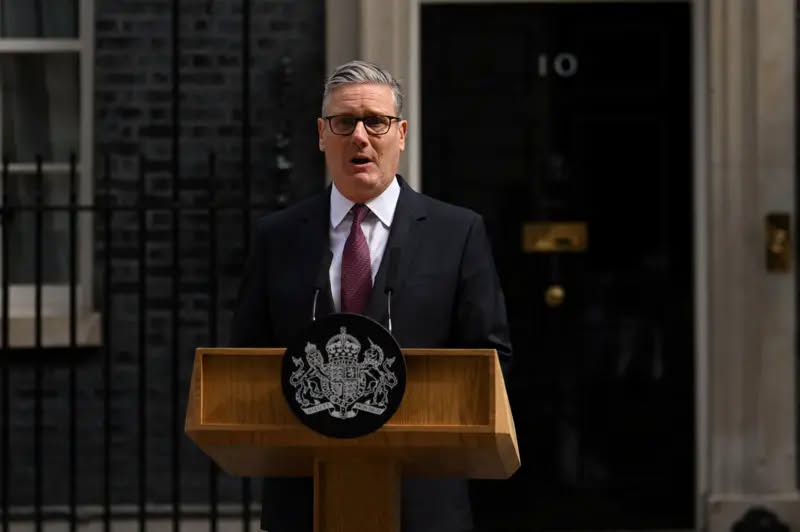
Prime Minister Keir Starmer on Monday, June 22, 2026, announced his resignation outside 10 Downing Street in London, confirming that he will step down as both Prime Minister of the United Kingdom and leader of the Labour Party following intense internal pressure and a deepening political crisis within his administration.
The 63-year-old leader, who swept to power in Labour’s historic 2024 landslide victory, said he had formally informed King Charles III of his decision, bringing an abrupt and turbulent end to his two-year tenure in office.
Addressing the nation in an emotional televised statement carried live by BBC and Sky News, Starmer acknowledged that he had lost the confidence of key figures within his own party and accepted the outcome of internal consultations.
“The question my party is asking now is whether I am best placed to lead us into the next election. I have heard the answer… and I accept that answer with good grace,” he said.
Starmer defended his record in government, highlighting economic recovery efforts, wage growth, and reforms aimed at stabilising public services and infrastructure investment. He insisted that his leadership had been guided by national interest rather than political expediency.
“Every decision I have made in office has been about putting the country I love first,” he stated.
Outlining his economic record, the outgoing Prime Minister pointed to improved wage growth and falling inflation, as well as what he described as progress in public investment and healthcare delivery.
“An economy that is stronger, going faster than our peers, wages rising, faster than inflation in every single month since we came to power. Investment secured, infrastructure being built, an end to austerity with the fastest fall in NHS waiting lists for 17 years…” he said.
Visibly emotional, Starmer also paid tribute to his family, thanking his wife Victoria, whom he described as his “rock,” and speaking warmly about his children.
“I want to be the best dad I can to my beautiful children,” he said, referring to them as his “pride and joy.”
His resignation comes amid a rapidly escalating internal Labour Party revolt, triggered by a resurgence of leadership rival Andy Burnham, whose by-election win in Makerfield significantly shifted the balance of power within the party. Burnham’s return to Parliament is widely seen as having emboldened calls for a leadership contest.
Starmer’s position had also been weakened by a series of political setbacks, including declining approval ratings, electoral losses in local contests, and growing public dissatisfaction over policy decisions on immigration and energy. His government was further strained by controversy surrounding high-profile appointments, including criticism over the selection of Peter Mandelson as US Ambassador.
Under the agreed transition plan, Starmer will remain in office as a caretaker Prime Minister until a new Labour leader is elected. Party nominations are expected to open on July 9 and close on July 16, 2026, ahead of the parliamentary summer recess.
A new Labour leader is expected to be confirmed before Parliament reconvenes in September 2026, marking what could become the UK’s seventh change of Prime Minister in just a decade.