



By Mumo Judah, June 22, 2026
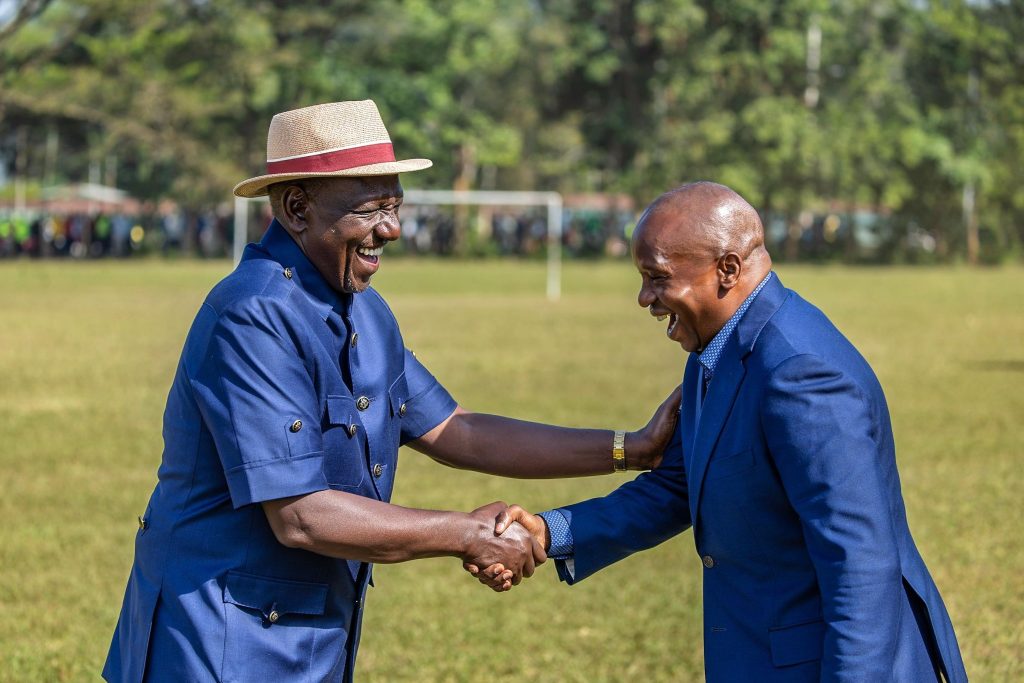
President William Ruto, accompanied by Deputy President Kithure Kindiki, officially launched the nationwide Coffee Revitalisation Programme in Kianyaga, Kirinyaga County, marking a major policy push aimed at restructuring Kenya’s coffee sector and boosting farmer earnings.
The high-profile launch, held at General Kassam Stadium, formed part of the government’s broader agricultural reform agenda focused on dismantling entrenched cartels, eliminating exploitative intermediaries, and restoring direct value to coffee farmers across producing counties.
During the event, President Ruto underscored the government’s commitment to overhauling the coffee value chain, stating that sweeping reforms had already been implemented to restrict licensing and curb market manipulation.
“We have overhauled the coffee value chain by limiting operators to one license. This will eliminate cartel control, prevent price manipulation, and ensure farmers receive fair earnings for their produce,” the President said.
He further noted that the reforms are beginning to yield tangible benefits for farmers, particularly through improved payment structures that guarantee higher returns per kilogram of coffee delivered to the market.
“These reforms have produced results, with farmers now receiving up to Ksh 160 per kilogram. This is part of our commitment to ensuring increased and direct income for smallholder farmers,” he added.
Central to the revitalisation programme is an ambitious production expansion strategy that includes the distribution of 20 million coffee seedlings through the New Kenya Planters Cooperative Union (New KPCU). The initiative is expected to significantly boost national output, with the government targeting production levels of 150,000 metric tons by 2029.
The programme also incorporates a financial stabilisation component, with over Sh979 million allocated as debt relief for coffee farmers in Kirinyaga County alone. In addition, the government has introduced Minimum Guaranteed Returns (MGR) to protect small-scale farmers from market volatility and ensure predictable earnings.
However, the presidential visit also highlighted emerging local political tensions, with some leaders raising concerns over stalled development projects in the region. Particular attention was drawn to General Kassam Stadium, where promised upgrade funds have yet to be fully disbursed, raising questions about infrastructure commitments tied to earlier government pledges.
Despite these concerns, the administration maintains that the coffee sector reforms represent a turning point in agricultural policy, aimed at restoring profitability to farmers and strengthening Kenya’s position in the global coffee market.