



NY JOSHUA OCHIENG
A journalist who visited a public health facility in Likoni, Mombasa County, seeking medical attention has recounted a frustrating experience involving delays in SHA registration and difficulties completing the required annual contribution after his Hustler Fund loan reportedly became an obstacle to payment.
Peter Nyongesa said he arrived at the public hospital while unwell, hoping to receive treatment under the free healthcare services available at public health facilities in Mombasa County. However, he was informed that he needed to have an active Social Health Authority (SHA) cover to access the services without paying directly.
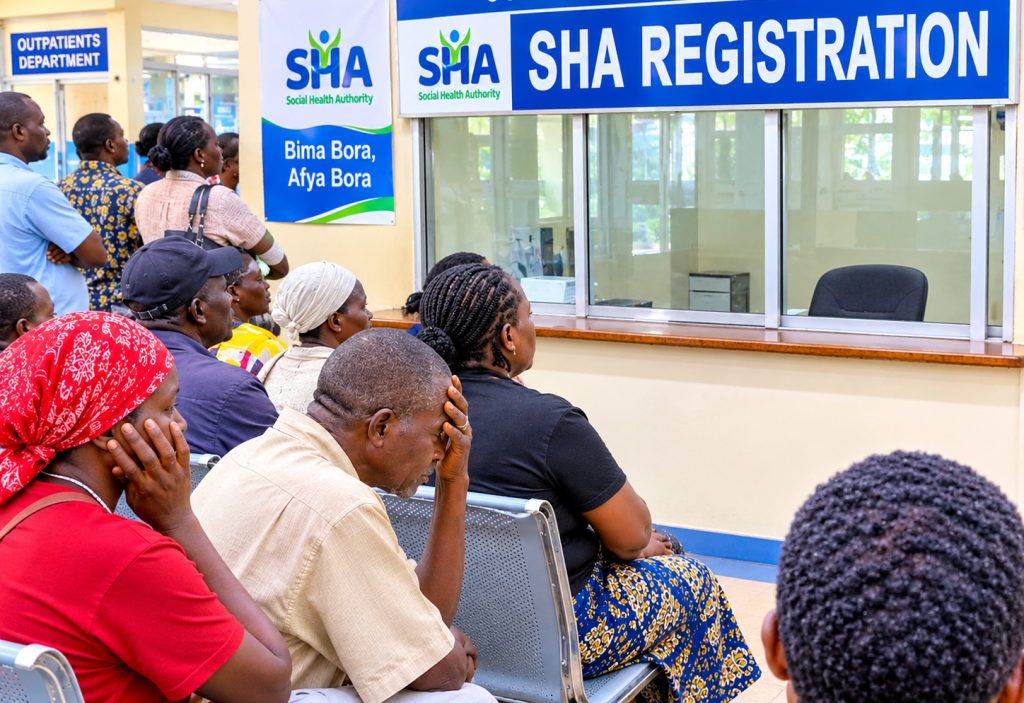
He was directed to the designated SHA registration office within the facility, but what followed was hours of waiting without assistance.
According to Nyongesa, he spent approximately two to three hours at the registration point, only to learn that the officer responsible for registering patients had not reported to work.
The delay left him frustrated, particularly because he was already sick and had visited the facility in search of urgent medical attention.
“I did not go to the hospital to write a story. I was unwell and I went for treatment, like everybody else,” he said.
Nyongesa described a crowded waiting area, with several women accompanied by young children, as patients waited for assistance.
After spending hours without being registered, he decided to look for an alternative way of completing the process and made his way to a nearby cybercafé despite his condition.
At the cybercafé, an attendant helped him complete the SHA registration process within a short time. However, he had to pay for the service, further reducing the little money he had carried for his medical needs.
Nyongesa said he had approximately KSh800 to KSh1,000, which he had hoped to use towards accessing treatment.
After completing the registration, he attempted to make the required SHA contribution, which he said was approximately KSh6,000 annually.
However, his efforts to complete the payment through the *147# platform were unsuccessful.
He said that after following the instructions on his phone and reaching the payment stage, the system prompted him to first clear his outstanding Hustler Fund loan before proceeding with the SHA payment.
The requirement left him questioning why a person seeking medical assistance should encounter a loan repayment condition while trying to access health coverage.
“I did not come for a loan, I came for health,” he said, expressing frustration over the experience.
Unable to raise the required annual contribution and having spent part of his remaining money at the cybercafé, Nyongesa said he had no option but to seek treatment at a private health facility using the little money he had left.
He also raised concerns over the long queues and what he described as a disorganised registration process, questioning why patients should be left waiting for hours because the officers responsible for assisting them are unavailable.
His experience has raised questions about the accessibility of SHA registration services, particularly for people who arrive at public hospitals without active cover and need assistance to enrol before accessing healthcare.
It also highlights the financial difficulties that may face unemployed Kenyans and people working in the informal sector, including mama mboga, bodaboda operators and small-scale traders who depend on irregular daily earnings.
Nyongesa questioned how people without stable incomes are expected to afford annual health contributions, especially when they are already struggling to meet basic needs.
He further challenged the punctuality and accountability of public officers, arguing that patients should not be left waiting for hours because the staff responsible for registration have not reported to work.
For patients who are sick, such delays can be particularly difficult, as some may lack the strength or financial resources to seek registration assistance elsewhere.
While SHA is intended to improve access to healthcare and reduce the financial burden on households, Nyongesa’s experience points to the practical challenges some citizens may encounter before they can benefit from the scheme.
His account raises broader questions about whether registration support is readily available at public hospitals and whether payment procedures adequately consider the circumstances of financially vulnerable Kenyans.
For Nyongesa, the experience ended with him seeking treatment at a private facility instead of receiving the assistance he had initially gone to the public hospital to obtain.
He is calling for improved service delivery at public health facilities and a review of barriers that may prevent ordinary Kenyans from registering for SHA and accessing healthcare when they need it most.