


By Joshua Otieno | April 10, 2026
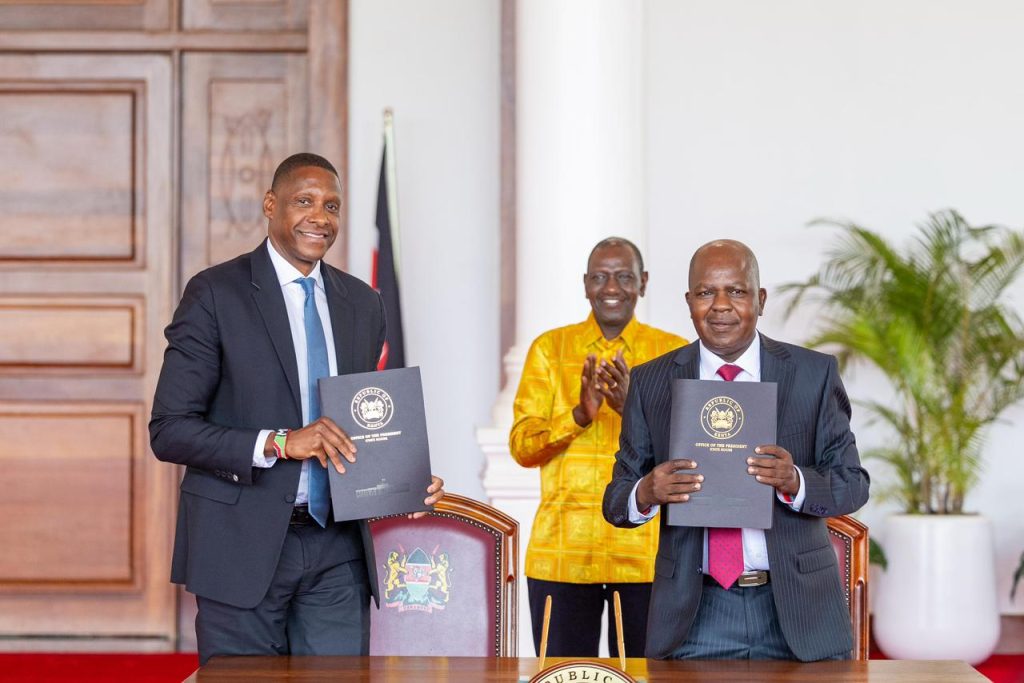
STATE HOUSE, NAIROBI — William Ruto today presided over the signing of a major lease agreement between Kenya Railways Corporation and Zaria Group, paving the way for the construction of a state-of-the-art indoor arena within the Nairobi Railway City.
The agreement, signed by Kenya Railways Managing Director Philip Mainga and Zaria Group Chairman Masai Ujiri, grants a long-term lease for the development of the facility at the heart of the 425-acre urban redevelopment project.
“This arena is not just a building; it is an investment in the limitless potential of our youth.”
President Ruto described the project as a transformative milestone for Kenya’s sports and creative sectors, positioning Nairobi as a continental hub for entertainment and international events.
“By partnering with visionaries like Masai Ujiri and the Zaria Group, we are ensuring that Nairobi becomes the undisputed hub for sports and entertainment in Africa.”
The proposed Nairobi Arena will host international basketball tournaments, concerts, and high-level conferences, forming a central component of the larger Nairobi Railway City initiative aimed at modernizing the capital’s central business district.
Masai Ujiri emphasized that the facility will play a key role in nurturing African talent and providing a global platform for local athletes and creatives.
“Kenya has the talent, and now it will have the infrastructure to match.”
The signing ceremony coincided with the enactment of the National Infrastructure Fund Bill 2026, a move expected to streamline financing for large-scale public-private partnerships across the country.
Construction of the arena is expected to begin immediately, with the broader Railway City project projected to create thousands of jobs during both construction and operational phases.
The development, valued at approximately KSh 29.6 billion, is also backed by international partnerships and private investment, underscoring Kenya’s growing appeal as a destination for global infrastructure projects.
Designed to meet international standards, the arena will feature modern sports facilities, conference spaces, and integrated transport connectivity, linking directly to the revamped central railway station.
The project is also expected to boost Nairobi’s creative economy while attracting investment in surrounding sectors such as hospitality, retail, and real estate.
With sustainability at its core, the development will incorporate green building technologies, water recycling systems, and energy-efficient infrastructure.
The Nairobi Arena now stands as a flagship component of Kenya’s ambition to become a leading sports, cultural, and economic powerhouse on the global stage.