



By Erestinah Jane | July 1, 2026
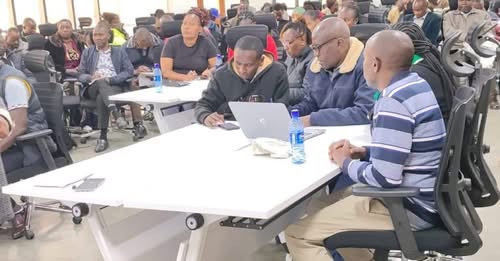
More than 150 Junior School teachers in Kisumu County have begun training on the use of virtual science laboratories as part of efforts to strengthen the teaching of practical science under the Competency-Based Curriculum (CBC).
The digital learning initiative, launched on Wednesday, July 1, 2026, seeks to bridge the gap created by the shortage of physical science laboratories in many public primary schools that now host Junior Secondary School learners.
Through the programme, teachers are being equipped with skills to conduct simulated science experiments using computers, tablets and smartphones, allowing students to carry out practical lessons in chemistry, biology and physics without the need for conventional laboratories.
Education officials say the initiative is intended to ensure that all learners receive quality practical science instruction regardless of whether their schools have laboratory facilities.
The training introduces teachers to virtual laboratory software that recreates real-life scientific experiments through interactive digital simulations.
Using the platform, students can safely mix chemicals, observe chemical reactions, examine microscopic organisms, perform biology dissections and explore scientific concepts that would otherwise require expensive laboratory equipment.
Officials noted that the technology provides learners with hands-on experiences while eliminating many of the logistical challenges facing schools.
The programme comes at a time when many Junior Schools across Kenya continue to grapple with inadequate infrastructure following the rollout of the CBC.
Most public primary schools were originally designed for lower primary and upper primary education and therefore lack fully equipped chemistry, biology and physics laboratories needed for Junior Secondary learners.
Constructing laboratories has proved costly for many schools, leaving thousands of learners without adequate facilities for practical lessons.
Education stakeholders believe virtual laboratories offer an immediate and affordable alternative while schools continue to expand their infrastructure.
The digital platform significantly reduces the financial burden associated with practical science lessons.
Traditional laboratory experiments require schools to continually purchase chemicals, glassware, burners, microscopes and other consumable materials that must be replaced regularly.
With virtual laboratories, teachers can repeat experiments as many times as necessary without additional costs, enabling learners to practise concepts repeatedly until they fully understand them.
Officials say the approach also helps schools reduce operational expenses while maintaining the quality of science education.
Another major advantage highlighted during the training is improved learner safety.
Science practical sessions in conventional laboratories carry risks including chemical burns, broken glass, accidental fires and exposure to hazardous substances.
Virtual experiments eliminate these dangers entirely by allowing learners to perform the same activities in a controlled digital environment.
Teachers are expected to guide students through simulations that closely mirror actual laboratory procedures while ensuring a completely safe learning experience.
The training also coincides with the commencement of the Kenya Junior School Education Assessment (KJSEA) practical projects for Agriculture and Pre-Technical Studies, which officially began on July 1, 2026.
Education officials say digital tools such as virtual laboratories will complement these practical assessments by helping learners develop investigative, analytical and problem-solving skills required under the CBC.
Unlike the previous examination system, CBC places significant emphasis on competency development through practical application of knowledge rather than memorisation alone.
Teachers attending the training are learning how to integrate virtual experiments into daily classroom instruction, develop lesson plans using digital simulations and assess learners’ understanding through interactive activities.
They are also being trained to troubleshoot common technical challenges and maximise the use of available digital devices in schools.
Education officers overseeing the programme expressed confidence that the initiative will improve science performance by making practical learning more accessible, engaging and consistent across schools with varying levels of infrastructure.
The programme forms part of broader efforts by education stakeholders to leverage technology in addressing infrastructure shortages while supporting the effective implementation of the Competency-Based Curriculum across the country.