



By Erestinah Jane, July 1, 2026
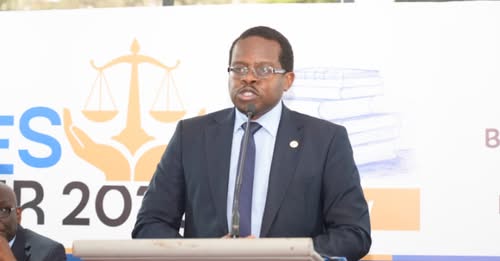
Law Society of Kenya (LSK) President Charles Kanjama, SC, has strongly condemned the growing concern over enforced disappearances, describing the practice as a grave violation of constitutional rights that has no place in a democratic society governed by the rule of law.
In a statement issued following a High Court directive ordering the National Police Service (NPS) to produce missing activists Maxwell Kiarie and Abdulaziz Duba Molu, Kanjama called on security agencies to strictly adhere to the Constitution and ensure that every arrest or detention is carried out within the framework of the law.
He emphasized that if any individual is suspected of committing an offence, the proper legal procedure is to arrest the person lawfully, inform them of the reasons for their arrest, and present them before a court within the timelines prescribed by the Constitution.
According to the LSK President, secretly detaining individuals or failing to disclose their whereabouts undermines public confidence in the justice system and erodes the constitutional protections guaranteed to every Kenyan.
Kanjama demanded full transparency from law enforcement agencies regarding the fate and location of the missing activists, saying families have a right to know where their loved ones are and under what legal authority they are being held.
He argued that openness and accountability by security agencies are essential in preserving public trust and preventing unnecessary anxiety among affected families and communities.
The LSK’s intervention comes amid heightened concerns over alleged enforced disappearances following the June 25, 2026, Gen Z memorial protests held in several parts of the country.
Human rights organisations have reported a number of cases in which activists and protest organisers allegedly disappeared after being picked up by unidentified individuals believed to be security officers.
The Kenya National Commission on Human Rights (KNCHR) has documented at least seven alleged cases of enforced disappearances linked to the protests and has called for immediate investigations into the incidents.
Kanjama also criticised what he described as the increasing use of pre-emptive arrests by law enforcement agencies.
He warned that arresting individuals solely on the basis of intelligence reports suggesting they may participate in demonstrations risks violating constitutional freedoms, including the rights to peaceful assembly, association and expression.
According to the LSK President, preventive policing must not become a tool for suppressing lawful dissent or intimidating citizens exercising their constitutional rights.
He stressed that any restrictions on fundamental freedoms must be lawful, necessary and proportionate, as required under Kenya’s Constitution.
Kanjama further urged security agencies to ensure that all policing operations are conducted professionally and within the confines of the law, warning that unlawful detentions and enforced disappearances expose the country to serious constitutional and international human rights concerns.
His remarks come against the backdrop of conflicting narratives regarding the alleged disappearances.
While families of the missing activists, civil society organisations and human rights defenders insist that enforced disappearances have resurfaced, the government has denied any involvement.
Interior Principal Secretary Dr. Raymond Omollo recently dismissed allegations of state-sponsored abductions, maintaining that the government does not sanction enforced disappearances.
He further claimed that some reported cases were self-orchestrated by individuals seeking publicity or attempting to portray the government negatively, remarks that have attracted criticism from rights organisations and opposition leaders.
As pressure mounts, human rights groups continue to call for independent investigations into all reported disappearances and for security agencies to account for every person reported missing following recent protests.
The High Court’s directive requiring police to produce Maxwell Kiarie and Abdulaziz Duba Molu is expected to form part of broader judicial scrutiny into allegations of unlawful detentions and enforced disappearances in the country.