



By Erestinah Jane, July 1, 2026
Research firm Infotrak Research & Consulting has clarified that its latest CountyTrak Performance Index is based on citizens’ perceptions of their elected leaders and should not be interpreted as a technical or legislative assessment of their performance.
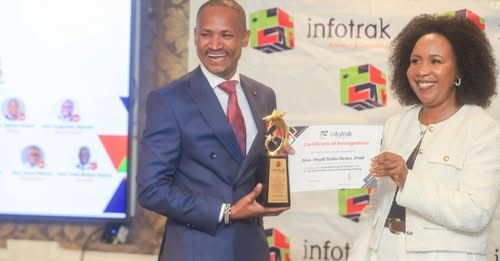
The findings were unveiled during the release of the 2026 CountyTrak Performance Index at the Villa Rosa Kempinski Hotel in Nairobi, where Infotrak Chief Executive Officer Angela Ambitho explained the methodology behind one of Kenya’s most closely watched leadership surveys.
According to Ambitho, the rankings reflect how wananchi perceive the performance of Members of Parliament, Senators and County Woman Representatives based on their day-to-day interactions and experiences with them.
She noted that the survey measures public satisfaction rather than legislative productivity or formal audits conducted by oversight institutions.
“This is a perception survey. It captures how citizens feel about the leaders they elected based on what they see and experience in their communities,” she explained.
The nationwide survey was conducted between January and May 2026 through Computer Assisted Telephone Interviews (CATI).
A total of 87,286 respondents were interviewed across all 47 counties, 290 constituencies and 1,450 county wards, making it one of the country’s largest public opinion studies on elected leadership.
Participants rated their leaders using a Likert scale ranging from one to ten, with the scores later converted into percentage approval ratings.
According to Infotrak, citizens based their evaluations on several key factors that influence how they perceive leadership performance.
The most significant consideration was whether elected leaders had fulfilled the promises they made during their election campaigns.
Delivery on campaign pledges accounted for 41 per cent of the overall approval score, making it the single biggest determinant of public satisfaction.
The management of public resources was another major factor.
Transparency, accountability and prudent use of public funds—including allocations from the National Government Constituencies Development Fund (NG-CDF) and county government budgets—contributed 35 per cent of the final performance score.
Residents also attached considerable importance to visible development.
The survey found that ongoing infrastructure projects such as roads, classrooms, health facilities, water projects and other community investments accounted for 30 per cent of a leader’s rating.
Infotrak said citizens generally reward leaders whose development projects are visible and actively progressing within their constituencies or counties.
Accessibility also featured prominently in the survey.
Respondents assessed how easily they could reach their elected leaders, how frequently the leaders visited their constituencies and how quickly they responded to emergencies and community concerns.
This aspect accounted for approximately 13 per cent of the overall rating.
The survey further found that communication remains an important element in shaping public opinion, with citizens expressing higher satisfaction with leaders who regularly engage residents, explain government programmes and maintain active communication channels.
Among Members of Parliament, Embakasi East MP Babu Owino emerged as the highest-rated legislator nationally with an approval rating of 80 per cent.
He was followed by Kabuchai MP Joseph Kalasinga, who recorded a 78 per cent approval rating, while Kiharu MP Ndindi Nyoro ranked third with 76 per cent.
In the Senate category, Kirinyaga Senator James Kamau Murango emerged as the top-performing