



By Mumo Judah
Kisumu, Kenya, June 1, 2026
The Orange Democratic Movement (ODM) has formally endorsed President William Ruto’s bid for a second term in office, marking a significant political realignment ahead of the 2027 General Election and signaling the party’s intention to pursue the presidency in 2032.
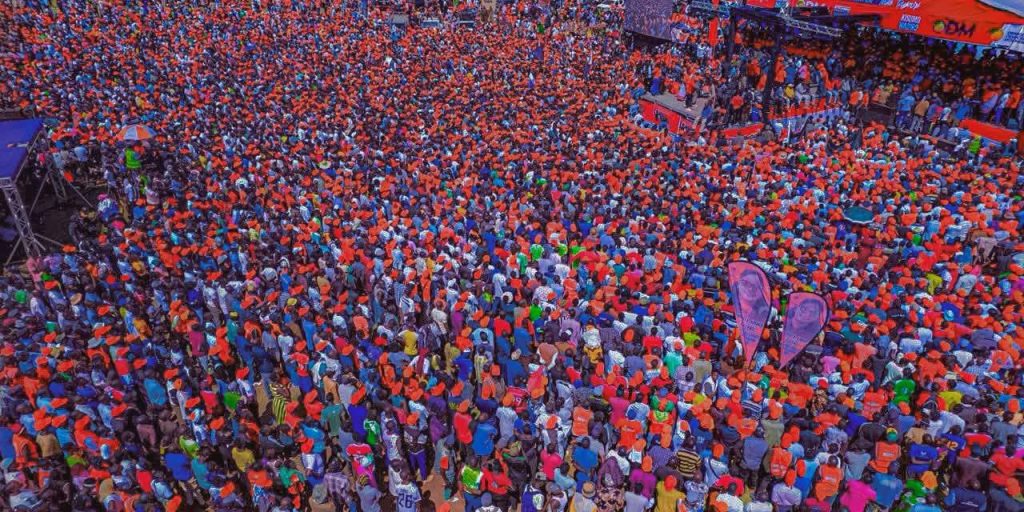
The declaration was made during the “Kisumu Wabiiro” rally at Kirembe Grounds on Sunday, where senior ODM leaders led by party leader Dr. Oburu Oginga and National Chairperson Gladys Wanga pledged the party’s support for President Ruto’s re-election campaign.
The endorsement effectively strengthens the growing political cooperation between ODM and the ruling United Democratic Alliance (UDA), laying the groundwork for a formal pre-election alliance ahead of the next general election.
Speaking during the rally, ODM leaders announced that while the party would support Ruto’s re-election bid in 2027, it expects reciprocal support from its coalition partners when it fields its own presidential candidate in the 2032 General Election.
To facilitate the partnership, the party revealed plans to establish a dedicated team that will spearhead coalition negotiations and coordinate engagements with UDA ahead of the 2027 polls.
Leaders supporting the alliance argued that ODM’s participation in the broad-based government has enhanced the party’s influence in national affairs while accelerating development projects in its traditional strongholds and other parts of the country.
Among the strongest advocates of the cooperation framework were Oburu Oginga, Gladys Wanga and Cabinet Secretary Hassan Joho, who maintained that working with the government offers greater opportunities for development, stability and national cohesion.
However, the endorsement has exposed deepening divisions within ODM, with a section of party leaders expressing concern that the arrangement could weaken the party’s identity as an opposition movement.
In a strongly worded address, Oburu Oginga challenged critics of the alliance to support the party’s direction, warning that those unwilling to embrace the cooperation strategy should reconsider their place within ODM.
The remarks are expected to intensify ongoing debates within the party, particularly among younger leaders who have publicly questioned ODM’s growing ties with the Kenya Kwanza administration.
Among the leaders reported to be skeptical of the alliance are Nairobi Senator Edwin Sifuna, Embakasi East MP Babu Owino and Siaya Governor James Orengo, who have consistently argued that ODM should maintain its independence and continue playing a robust opposition role.
Political observers say the Kisumu declaration represents one of the most consequential shifts in Kenya’s political landscape since the formation of the broad-based government and could significantly influence alliance-building ahead of the 2027 elections.
The endorsement is likely to trigger further debate within ODM and across the wider opposition movement as political parties begin positioning themselves for the next electoral cycle. While supporters view the alliance as a strategic pathway to power and development, critics warn that it risks blurring the distinction between government and opposition at a time when accountability remains a key pillar of democratic governance.
With ODM now openly backing President Ruto’s re-election bid and setting its sights on the presidency in 2032, Kenya’s political landscape appears set for another major realignment as the countdown to the next General Election gathers momentum.