



By Fridah Mbuvi, June 10, 2026
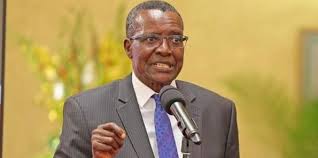
Former Chief Justice David Maraga has strongly criticised the High Court judgment that upheld former Deputy President Rigathi Gachagua’s impeachment, arguing that the court reached a legally inconsistent conclusion by finding a violation of fair hearing rights yet still allowing the removal from office to stand.
Speaking during a live interview on Spice FM, Maraga said the three-judge bench—comprising Justices Eric Ogola, Anthony Mrima, and Freda Mugambi—correctly identified a breach of constitutional rights but failed to apply what he described as the only lawful remedy: nullification of the entire impeachment process.
The court, in its landmark decision delivered in June 2026, upheld the Senate’s October 2024 decision to remove Gachagua from office. However, it also found that senators violated his right to a fair hearing after declining to grant him an adjournment on medical grounds during the proceedings. Instead of overturning the impeachment, the court awarded Gachagua Sh50 million in constitutional damages.
Maraga argued that this outcome creates a dangerous legal contradiction within Kenya’s constitutional framework, particularly under Article 25(c), which protects the right to a fair trial as one of the non-derogable rights that cannot be limited under any circumstances.
“Once a fundamental right to a fair hearing is violated in a quasi-judicial process, the entire process collapses,” Maraga’s position implies, insisting that constitutional compliance cannot be partially enforced through financial compensation alone.
He warned that allowing defective processes to stand despite proven violations risks encouraging state institutions to ignore procedural safeguards, knowing that constitutional breaches may simply be settled through monetary awards rather than annulment of decisions.
Maraga’s remarks add to growing debate within Kenya’s legal fraternity over the implications of the ruling. The Law Society of Kenya (LSK), through President Faith Odhiambo, has also questioned the logic of upholding an outcome derived from a process found to be procedurally flawed, warning that it weakens accountability mechanisms for public institutions.
Former Deputy President Rigathi Gachagua has also rejected the court’s compensation award, terming it insufficient and symbolic rather than restorative. His legal team, led by Senior Counsel Paul Muite, has already filed an appeal seeking full nullification of the impeachment decision.
On the other hand, the Senate has filed a counter-appeal, with Speaker Amason Kingi defending the legislative process and arguing that parliamentary independence in impeachment proceedings must be respected by the Judiciary.
The conflicting appeals now set the stage for what is expected to be a defining constitutional showdown over the limits of legislative authority, judicial review, and the enforcement of fundamental rights in Kenya’s impeachment framework.