



By Mumo Judah, June 9, 2026
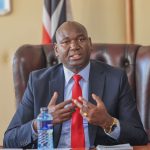
Lurambi Member of Parliament Bishop Titus Khamala has announced plans to introduce a controversial motion in the National Assembly seeking to gradually phase out boarding schools across Kenya, in what he describes as a sweeping reform aimed at strengthening local day schooling and reducing the financial burden on parents.
Khamala argues that the long-standing boarding school system has become increasingly unsustainable and, in some cases, exploitative, and that resources currently spent on maintaining boarding facilities should instead be redirected toward improving infrastructure and staffing in community-based day schools.
Speaking on the proposal, the MP said many public boarding institutions have drifted away from their core educational mandate and are now operating like commercial entities, placing undue pressure on parents through hidden or inflated charges.
“Many schools have turned into business centers where parents are constantly subjected to unnecessary and sometimes unauthorized fees in the name of boarding and maintenance,” Khamala said.
He further cited recurring cases of student unrest, dormitory fires, and unexplained deaths in boarding institutions as evidence that the system is struggling to guarantee the safety and welfare of learners. According to him, these incidents point to deeper structural weaknesses in the boarding model that require urgent policy intervention.
Under his proposed motion, the government would progressively phase out boarding facilities while redirecting funding to strengthen neighborhood day schools. The plan envisions improved laboratories, libraries, classrooms, and teacher deployment at the grassroots level to ensure equal access to quality education without students leaving their homes.
Khamala also argued that keeping learners at home would strengthen parental involvement in education and discipline, suggesting that closer family supervision could help address rising cases of indiscipline and youth-related social challenges.
“When children are at home, parents are directly involved in their daily development, which helps instill discipline and accountability from an early age,” he said.
The proposal comes at a time when the Ministry of Education is already under pressure to reform school structures under the Competency-Based Curriculum (CBC), which has increasingly emphasized day schooling, particularly for junior secondary learners. Education stakeholders have been encouraging the model as a way of reducing the financial strain associated with boarding education.
However, analysts note that a full transition away from boarding schools would require massive investment in new infrastructure to accommodate millions of learners currently enrolled in boarding institutions across the country. Concerns have also been raised over capacity gaps, especially in rural and arid regions where schools are widely spaced.
The motion is expected to spark heated debate in Parliament once formally tabled, with supporters arguing for affordability and child welfare, while opponents are likely to defend boarding schools as essential for academic discipline, national integration, and access to education in remote areas.
Education sector stakeholders, including school administrators and private education providers, are also expected to weigh in strongly as the proposal moves through legislative discussion in the coming weeks.