


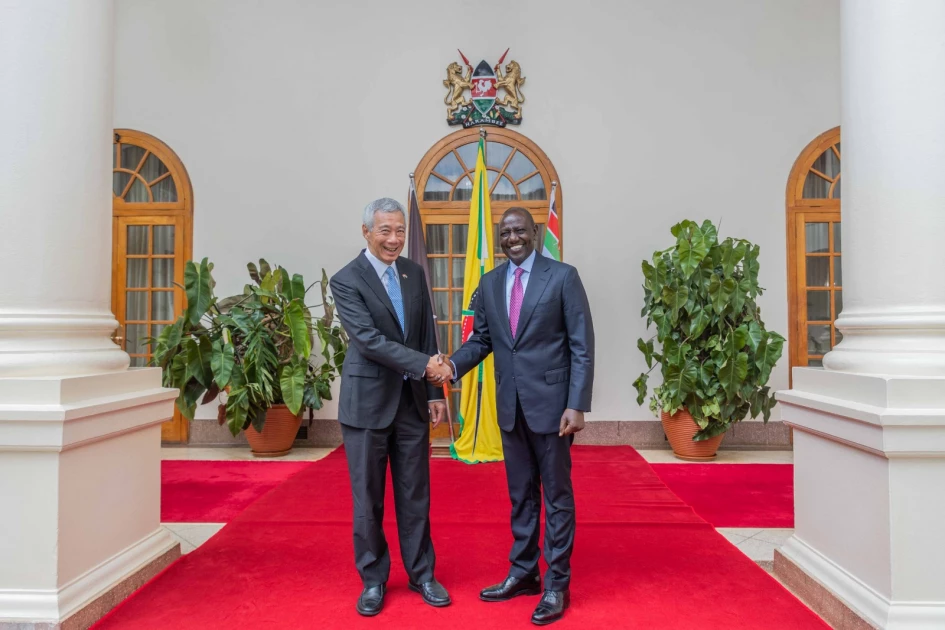

By Ibrahim Jodia Commentary | February 23, 2026
Many developing nations aspire to cross the divide into the developed world. In Kenya, that ambition is often framed through comparisons with Singapore a country frequently cited as a model of rapid transformation. The question, however, is not whether Kenya desires such progress, but whether it is prepared to pay the cost that came with it.
For decades, successive Kenyan administrations have spoken about turning Kenya into “the next Singapore.” That narrative has gained renewed momentum under the leadership of William Ruto, whose government has repeatedly emphasized economic reforms, investment, and accelerated development. Singapore’s success story is indeed impressive—but it did not come cheaply.
In the 1960s, Singapore was far from the gleaming global hub it is today. After its separation from Malaysia in 1965, poverty was widespread, unemployment was high, and a significant portion of the population lived in slums. The turning point came under the leadership of Lee Kuan Yew, who became Prime Minister in 1959 and ruled for more than three decades.
Lee Kuan Yew’s approach to governance was uncompromising. His administration prioritized results over debate, discipline over dissent. Over a 30-year period, Singapore attracted multinational corporations, rolled out massive public housing programmes, and built strong state institutions that laid the foundation for sustained economic growth.
Yet, this transformation carried a heavy political and social cost. Civil liberties were tightly controlled. Critics in the media faced crippling lawsuits, foreign publications were restricted, and political opponents were sidelined—sometimes without due process. Freedom of expression was openly dismissed as a “Western luxury,” and the courts rarely, if ever, ruled against the government. Democracy, as many understand it today, was sacrificed in the name of order and development.
This reality brings the debate back home. If Kenya truly seeks to emulate Singapore’s trajectory, it must confront an uncomfortable question: are Kenyans willing to accept the kind of sacrifices Singaporeans endured? The price may not be identical, but meaningful transformation often demands trade-offs—between speed and consultation, authority and accountability, order and freedom.
Kenya’s challenge, therefore, is not just about ambition or vision. It is about choice. Can the country chart a path to prosperity that balances development with democratic values? Or will the cost of becoming “the next Singapore” prove too high for a society deeply rooted in pluralism and open debate?