


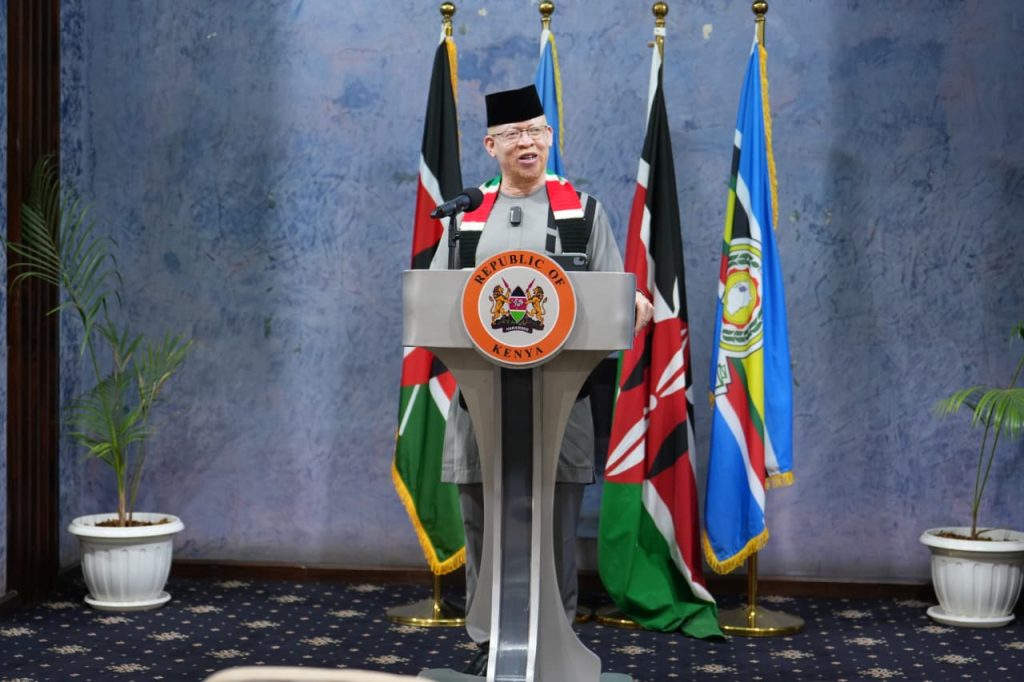

By Joshua Otieno | April 13, 2026
NAIROBI, KENYA — Government Spokesperson Dr. Isaac Mwaura has outlined key government priorities spanning education, energy, and economic performance during a press briefing held at Harambee Annex on Monday.
Dr. Mwaura said the government remains committed to addressing the teacher shortage, noting that more than 100,000 teachers have already been recruited out of a targeted 116,000.
“The government remains committed to employing 116,000 teachers. The matter concerning the remaining recruits is currently before the courts and is being handled by relevant institutions,” he said.
On fuel supply, Mwaura moved to reassure the public following recent concerns, stating that the country has sufficient reserves despite earlier disruptions.
“It is important to clarify that there is enough fuel supply in the country. Initial disruptions were due to hoarding, and investigations are ongoing,” he said, adding that new guidelines from the Energy and Petroleum Regulatory Authority are expected.
The spokesperson also highlighted ongoing interventions in the agricultural sector, particularly the clearance of debts in the coffee and sugar industries.
According to Mwaura, the government has allocated KSh 2 billion to begin settling the KSh 6.8 billion owed in the coffee sector, while a similar amount has been set aside to address part of the KSh 10 billion debt in the sugar industry.
“These interventions are aimed at easing the burden on farmers and ensuring sustainability in the sector,” he noted.
On energy, Mwaura said the government is pursuing diversification strategies aimed at increasing installed electricity capacity from 3,271 megawatts to at least 10,000 megawatts within five years.
He cited planned nuclear energy projects in Siaya and Kilifi counties, with the Siaya plant expected to commence construction in March 2027 and generate up to 2,000 megawatts upon completion.
In the economic sector, the government reported improved macroeconomic indicators, with inflation easing to 5.3 percent and the Kenyan shilling stabilizing at approximately 130 against the US dollar.
Real GDP growth is projected at 5.5 percent for the 2025/26 financial year, supported by recovery in agriculture and a resilient services sector.
Tourism performance was also highlighted, with the country recording 7.9 million tourist visits and a growth rate of 9 percent, alongside increased domestic travel.
Mwaura further noted that government revenue collection has surpassed KSh 2 trillion, attributing the growth to improved efficiency and fiscal discipline.
On social development, the spokesperson pointed to progress in women empowerment, citing increased representation in leadership and expanded access to financial support through initiatives such as the Women Enterprise Fund, the National Government Affirmative Action Fund, and the Hustler Fund.
He also addressed reforms in the education sector, including revised guidelines for the National Drama Festival aimed at promoting creativity, safety, and learner-driven content while prohibiting inappropriate material.
On governance, Mwaura urged Kenyans, particularly the youth, to participate in the ongoing voter registration exercise being conducted by the Independent Electoral and Boundaries Commission.
The briefing also touched on preparations for the 2027 African Cup of Nations, with Kenya, Tanzania, and Uganda committing funds toward infrastructure upgrades and tournament readiness.
The address underscored the government’s continued focus on economic stability, service delivery, and long-term development planning across key sectors.