


By Erestinah Jane, July 10, 2026
The newly appointed East African Community (EAC) Secretary-General, Ambassador Stephen Patrick Mbundi, has begun his maiden official visit to Kenya with a high-level meeting aimed at strengthening regional integration and accelerating implementation of the bloc’s development agenda.
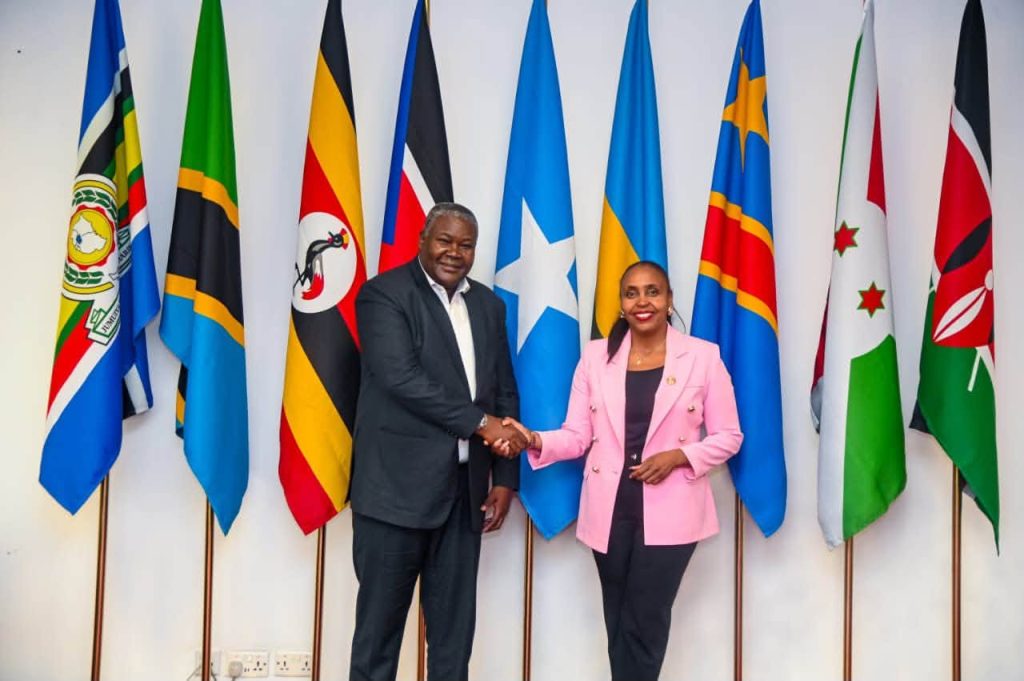
Ambassador Mbundi paid a courtesy call on Principal Secretary for the State Department for East African Community Affairs, Dr. Caroline W. Karugu, at the ministry’s headquarters in Nairobi, where the two leaders held discussions on Kenya’s role in advancing the East African Community’s strategic priorities.
The meeting served as an opportunity for the newly appointed Secretary-General to engage the Kenyan government on key regional issues, including trade, infrastructure development, financing, and regulatory reforms designed to deepen economic cooperation among EAC member states.
A major focus of the discussions was the removal of persistent non-tariff barriers (NTBs), which continue to impede the free movement of goods and services across the region despite the establishment of the EAC Common Market.
The leaders also explored measures to improve trade facilitation by harmonizing regulations and simplifying cross-border procedures to make it easier for businesses to operate within the regional bloc.
Infrastructure connectivity featured prominently during the meeting, with both sides emphasizing the need to strengthen transport networks, expand cross-border road infrastructure, and improve efficiency at One-Stop Border Posts (OSBPs) to reduce cargo clearance delays and lower the cost of doing business.
The discussions further examined alternative financing mechanisms that could enable the East African Community to fund major regional infrastructure projects while reducing reliance on external development partners.
Officials noted that innovative internal financing models would help address recurring budgetary constraints facing the regional bloc and support the implementation of priority integration programmes.
Regulatory harmonisation was also identified as a critical component of regional integration, with both leaders agreeing on the importance of aligning standards, policies, and legal frameworks to enhance competitiveness and create a more predictable business environment across member states.
Emphasizing the importance of strengthening trade within the region, the Chairperson of the EAC Council of Ministers reiterated that regional commerce remains central to the bloc’s long-term economic transformation.
“Trade remains a key engine for economic growth and regional integration. On account of this, we must address internal barriers to intra-East African Community (EAC) trade. We must eliminate non-tariff barriers, enhance infrastructure connectivity and foster regulatory harmonisation.”
The meeting underscored Kenya’s continued commitment to supporting the objectives of the East African Community, particularly efforts aimed at promoting free movement of goods, services, capital and people among partner states.
Ambassador Mbundi’s visit comes at a time when the EAC is pursuing deeper economic integration through enhanced trade cooperation, improved infrastructure, and policy coordination among its member countries.
As Secretary-General, he is expected to spearhead the implementation of the Community’s strategic programmes from the EAC Secretariat headquartered in Arusha, Tanzania, while working closely with partner states to address emerging regional challenges and unlock new opportunities for economic growth.