



By Mumo Judah, Nairobi, June 3, 2026
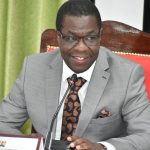
Health Cabinet Secretary Aden Duale has defended the controversial proposed Ebola isolation facility at Laikipia Airbase, stating that the project is anchored on a legally binding Kenya–United States health cooperation agreement initiated in 2015 and later extended in 2022.
The project has sparked nationwide debate, legal challenges, and public protests, with critics questioning its transparency, location, and potential security and health risks.
Appearing before Parliament, CS Duale maintained that the government is not introducing a new arrangement but implementing an existing international framework on disease preparedness and biosecurity cooperation between Kenya and the United States.
He explained that the original agreement was signed in 2015 during the administrations of former President Uhuru Kenyatta and former U.S. President Barack Obama as part of a long-term health security partnership designed to strengthen Kenya’s capacity to respond to infectious disease outbreaks and biological threats.
According to Duale, the framework was later renewed in April 2022, extending its validity until April 2029, thereby continuing Kenya’s obligations under the bilateral arrangement.
He said:
“The Laikipia facility is not an isolated or new initiative. It is part of a structured bilateral health cooperation framework that has existed since 2015 and was legally extended in 2022.”
Duale further told Parliament that the proposed 50-bed isolation unit at Laikipia Airbase will operate under a joint command structure involving the Ministry of Health and the Kenya Defence Forces (KDF), with military medical units playing a central operational role.
He stated:
“Operational control will be jointly managed, and the Kenya Air Force Commander will head the facility under a coordinated structure between KDF medical services and the Ministry of Health.”
The Cabinet Secretary dismissed claims that the facility would exclusively serve foreign nationals, insisting that it is designed for both Kenyan and international cases, particularly supporting troops deployed in regional peacekeeping missions in Ebola-prone areas such as the Democratic Republic of Congo.
He added that the Laikipia Airbase was selected due to strategic considerations including high-level military security, rapid response capability, and low population density to minimize potential public exposure risks.
“This is a national preparedness facility. It is not designed for one category of patients but for both Kenyan personnel and international cases where necessary,” he said.
The project forms part of a wider national health security framework involving multiple isolation and treatment units across the country aimed at strengthening Kenya’s preparedness for epidemics and cross-border disease threats.
However, the facility has faced strong opposition, including legal action that led to a temporary suspension of its rollout after the High Court issued orders following petitions by the Law Society of Kenya (LSK) and the Kenya Medical Practitioners, Pharmacists and Dentists Union (KMPDU).
The petitioners cited concerns over lack of public participation, transparency in planning, and the potential risks associated with hosting an Ebola treatment facility within a military installation.
The court order triggered protests in parts of Laikipia, particularly in Nanyuki, where residents raised fears over safety and the possibility of exposure to highly infectious diseases.
Despite the backlash, the Ministry of Health insists that the project remains part of Kenya’s broader disease surveillance and emergency preparedness system, which includes coordination with international partners and security agencies.
The matter is expected to remain under both judicial and parliamentary scrutiny as stakeholders continue to debate the legality, necessity, and safety of the facility.