


By Joshua Otieno | April 8, 2026
NAIROBI, KENYA – Several African governments have introduced emergency fiscal and conservation measures to protect citizens from soaring fuel prices triggered by the ongoing Middle East conflict.
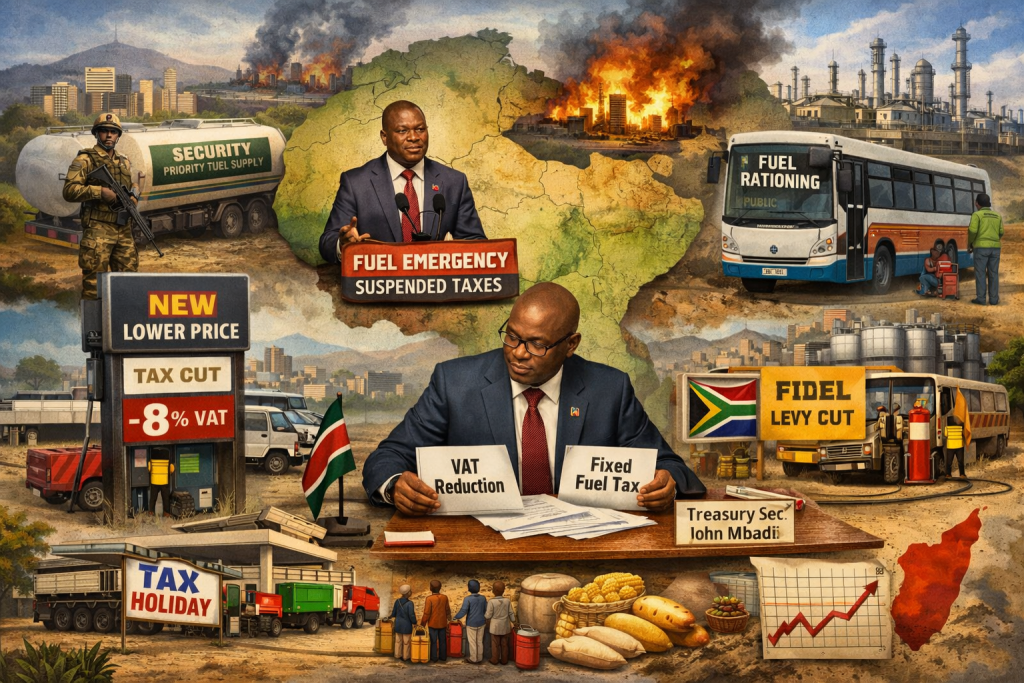
Across the continent, authorities are adopting strategies such as tax reductions, subsidies, and fuel rationing to stabilize markets and ease the burden on consumers.
In Kenya, the government is considering a shift from the current percentage-based taxation system to a fixed rate per litre to prevent automatic price increases when global oil prices rise.
The National Treasury is reviewing a proposal to reduce Value Added Tax (VAT) on fuel from 16 percent to 8 percent, while also exploring a flat-rate tax model. Treasury Cabinet Secretary John Mbadi has suggested setting a fixed levy per litre to enhance price predictability.
Additionally, Kenya has maintained buffer stocks of approximately 16 days for petrol and 19 days for diesel to cushion against immediate supply disruptions.
In Zambia, the government has implemented one of the most aggressive interventions by suspending both VAT and excise duty on fuel imports for three months. President Hakainde Hichilema also declared a national fuel emergency to facilitate rapid response measures and address suspected hoarding.
Meanwhile, Ethiopia has adopted a controlled distribution model, prioritizing fuel allocation for essential services such as security, public transport, and manufacturing. Authorities have also reduced daily diesel supply and enforced strict rationing while cracking down on illegal fuel trading.
In Zimbabwe, the government has removed select fuel import taxes and increased ethanol blending in petrol from 5 percent to 20 percent to reduce dependence on imported oil.
South Africa has similarly moved to cushion consumers by temporarily reducing fuel levies to offset anticipated price hikes.
Elsewhere, Madagascar has declared a 15-day state of energy emergency to manage acute shortages and restore supply stability.
The coordinated response highlights the growing impact of global oil market disruptions on African economies, with governments racing to shield citizens from inflationary pressures while ensuring energy security.
Experts warn that despite these interventions, sustained global instability could continue to drive fuel and commodity prices upward, with potential ripple effects on transport, food security, and overall cost of living across the region.