


By Erestinah Jane, July 1, 2026
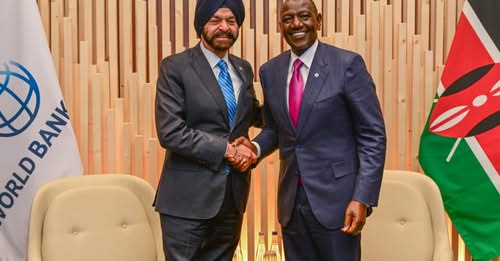
The World Bank Group has approved a KSh161.8 billion ($1.25 billion) financing package for Kenya to support wide-ranging economic reforms, strengthen public financial management, improve governance and help the country manage growing fiscal pressures.
The financing, announced on June 30, 2026, is intended to support the government’s reform agenda while reducing reliance on expensive domestic borrowing that has increased pressure on public finances in recent years.
According to the World Bank, the package combines policy-based financing with sustainability-focused lending to promote economic resilience, improve service delivery and encourage reforms aimed at enhancing accountability and transparency in public institutions.
The funding has been structured into two major components.
The first component is a Development Policy Operation (DPO) worth $750 million (approximately KSh97.1 billion), which will support institutional and policy reforms across several sectors of government.
This financing consists of a $340 million loan from the International Bank for Reconstruction and Development (IBRD) and a concessional $410 million package from the International Development Association (IDA), offering Kenya access to financing under more favourable terms than commercial borrowing.
The World Bank said the DPO is designed to help the government implement reforms that strengthen fiscal management, improve the business environment and reinforce public sector governance.
The second component is a Sustainability-Linked Facility valued at $500 million (approximately KSh64.7 billion).
Unlike conventional loans, this facility has been structured as a syndicated financing arrangement backed by World Bank credit guarantees to reduce investment risks and attract additional private sector financing.
The sustainability-linked financing will support environmental and climate-related initiatives, including efforts to reduce deforestation, strengthen climate resilience and expand access to electricity in underserved rural communities.
The World Bank noted that the financing aligns with Kenya’s broader commitments on sustainable development and climate action.
According to World Bank Division Director for Kenya, Qimiao Fan, approval of the financing followed Kenya’s implementation of several key policy reforms and its commitment to additional governance measures aimed at strengthening accountability in public institutions.
Among the reforms highlighted is the enactment of the Conflict-of-Interest Regulations 2026, which seek to enhance integrity among public officers by introducing stricter rules governing conflicts between public responsibilities and private interests.
The regulations are expected to improve transparency and reduce opportunities for corruption within government institutions.
The financing is also tied to the government’s commitment to fully implement a Treasury Single Account, commonly referred to as a single bank account policy, across ministries, departments and state agencies.
The World Bank said consolidating government funds into a unified account will improve cash management, reduce idle balances held in multiple accounts and strengthen oversight of public expenditure.
Kenya has also committed to strengthening its social protection systems through implementation of the Social Protection Regulations 2026 and the Enhanced Single Registry platform.
The reforms are intended to improve the identification of beneficiaries and ensure that government cash transfers reach vulnerable groups, including older persons, low-income households and other eligible recipients more efficiently and transparently.
The World Bank noted that the enhanced registry will reduce duplication, improve targeting of beneficiaries and strengthen the overall delivery of social assistance programmes.
The lender further indicated that the financing is expected to support macroeconomic stability by easing budgetary pressures and creating fiscal space for priority investments in infrastructure, healthcare, education and social protection.
By accessing concessional financing and reducing dependence on higher-cost domestic borrowing, Kenya is expected to lower debt servicing costs while maintaining funding for essential public services.
The World Bank reaffirmed its commitment to supporting Kenya’s long-term development agenda, noting that continued implementation of governance reforms, prudent fiscal management and stronger public institutions will be critical in sustaining economic growth and improving the country’s resilience to future economic shocks.