



By Mumo Judah
June 8, 2026
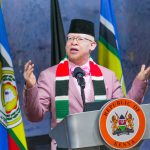
Kiambu County Governor Kimani Wamatangi has signed into law three major pieces of legislation aimed at strengthening early childhood education, promoting sustainable agriculture and facilitating development projects across the county.
The three laws, which were assented to after undergoing public participation and receiving approval from the Kiambu County Assembly, are expected to provide a legal framework for some of the county government’s flagship programmes while addressing emerging economic and environmental challenges.
Among the laws signed is the Kiambu County Early Childhood Development Education (ECDE) Act, which formally anchors reforms introduced under Governor Wamatangi’s administration. The legislation secures the county’s ongoing programme of upgrading ECDE infrastructure from old and dilapidated classrooms to modern learning facilities.
The Act also provides legal backing for the “Maziwa Freshi na Wamatangi” school feeding programme, which supplies daily porridge, milk and boiled eggs to more than 40,000 learners across the county. In addition, it guarantees the provision of free learning materials and seeks to streamline staffing and remuneration for ECDE teachers and caregivers.
Education has remained one of the key priorities of the county government since Wamatangi assumed office, with county authorities arguing that investment in early childhood learning is critical in improving literacy levels and laying a strong foundation for learners.
Governor Wamatangi also assented to the Agroecology Development Act, 2025, a law aimed at promoting sustainable farming practices amid increasing concerns over climate change, declining soil fertility and food insecurity.
The legislation seeks to encourage organic farming, urban agriculture and environmentally friendly production systems while creating market structures to support farmers. County officials say the law will help enhance food security and protect the environment by promoting sustainable agricultural practices.
Agriculture remains one of the main economic activities in Kiambu County, and authorities have increasingly focused on supporting farmers through modern farming techniques and climate-smart interventions in response to changing weather patterns and rising production costs.
The governor also signed the County Supplementary Budget II for the 2025/2026 financial year, paving the way for the reallocation of resources to priority sectors and development programmes.
The supplementary budget, which was scrutinized by the Budget and Appropriations Committee of the County Assembly, seeks to address urgent funding gaps and channel additional resources to key projects, including agricultural support programmes, expansion of local markets and improvement of water supply infrastructure.
County officials say the budget adjustments are intended to accelerate development and ensure that resources are directed towards projects with the greatest impact on residents.
The signing of the three laws marks a significant milestone for the county administration as it seeks to institutionalize reforms, strengthen service delivery and respond to emerging challenges facing residents.
Governor Wamatangi has maintained that legislation remains critical in ensuring continuity of development programmes and creating sustainable frameworks that will benefit current and future generations in Kiambu County.