


By Brian Said Iha, Washington D.C., June 3, 2026
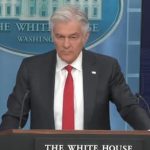
The Trump administration has officially abandoned plans to establish its controversial $1.8 billion Anti-Weaponisation Fund, marking a significant policy reversal following mounting legal challenges and growing opposition from Republican lawmakers. The decision was confirmed by Acting Attorney General Todd Blanche during testimony before a House Appropriations subcommittee, where he unequivocally stated that the Department of Justice would no longer pursue the initiative. “We’re not moving forward with the fund, period,” Blanche told lawmakers, bringing an abrupt end to a proposal that had sparked intense political debate across Washington.
The fund had been promoted by supporters as a tool to address what they described as the politicization and misuse of government institutions. However, critics argued that the proposal lacked sufficient safeguards and accountability measures, raising concerns about how such a substantial amount of taxpayer money would be managed and whether it could be vulnerable to political influence. The initiative quickly became one of the most contentious justice-related proposals advanced by the administration, drawing scrutiny from lawmakers, legal experts and civil liberties organizations.
Opposition to the proposal intensified in recent months as several Republican lawmakers publicly questioned both the size of the fund and its intended purpose. Some members of the president’s own party demanded greater clarity regarding oversight mechanisms, expenditure controls and the legal framework governing the programme. The resistance proved particularly significant because it came from within Republican ranks, undermining the administration’s efforts to build momentum for the proposal in Congress.
At the same time, legal experts raised concerns about potential constitutional and administrative hurdles that could have complicated the implementation of the fund. Questions surrounding its structure and authority fueled speculation that the programme could face prolonged court battles if it moved forward, creating additional uncertainty around its future.
Faced with growing political resistance and legal obstacles, the administration appears to have concluded that continuing to pursue the initiative would be increasingly difficult. Blanche’s testimony effectively ended any speculation about the programme’s future, confirming that the proposal has been permanently shelved.
The decision is expected to reignite discussions about how the administration plans to address concerns regarding institutional accountability and alleged political bias within federal agencies. While supporters of the original proposal argued that reform was necessary, opponents maintained that strengthening existing oversight structures would be a more effective and less controversial approach.
Political analysts say the collapse of the Anti-Weaponisation Fund underscores the challenges administrations can face when major policy proposals encounter resistance not only from opposition parties but also from within their own political coalition. The episode also highlights the influential role of Congress in determining the fate of large-scale federal spending initiatives.
With the proposal now officially withdrawn, attention is likely to shift toward alternative reforms that could emerge from either the Department of Justice or lawmakers seeking to address similar concerns through more conventional legislative channels. For now, the administration’s decision closes the chapter on one of the year’s most controversial policy proposals, ending a debate that generated significant political controversy long before the fund ever became operational.