



By Erestinah Jane | July 1, 2026
The National Treasury has allocated KSh 102.3 billion for the development and rehabilitation of Kenya’s road network, with part of the funding earmarked to revive Nairobi’s long-awaited Bus Rapid Transit (BRT) system.
The allocation, announced under the 2026/27 financial year budget, includes KSh 44.3 billion for the construction of new roads and bridges and KSh 58 billion for the rehabilitation and maintenance of existing transport infrastructure across the country.
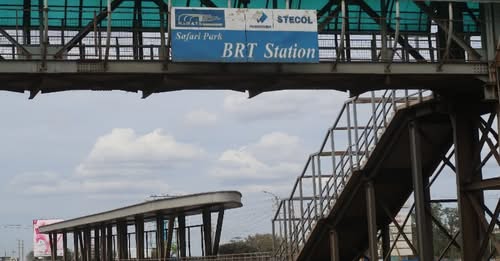
A key beneficiary of the funding is Nairobi’s Bus Rapid Transit (BRT) Line 5 along Outer Ring Road, a project the government hopes will accelerate efforts to establish an efficient mass public transport system in the capital.
The funding is expected to support the construction of dedicated BRT infrastructure along the corridor, which links densely populated residential estates in eastern Nairobi with key commercial and industrial areas.
Government officials say the project forms part of the wider Mass Rapid Transit System (MRTS), which seeks to reduce chronic traffic congestion, improve mobility, and provide Nairobi residents with a faster, safer and more reliable public transport alternative.
Once completed, BRT Line 5 is expected to serve thousands of commuters daily by significantly reducing travel times along one of the city’s busiest transport corridors.
Unlike conventional bus services, the Bus Rapid Transit system will operate on exclusive bus lanes separated from regular traffic, enabling buses to move efficiently even during peak hours.
Passengers will also benefit from modern stations equipped with off-board fare payment systems, allowing commuters to purchase tickets before boarding and reducing delays at bus stops.
The government also plans to deploy high-capacity electric buses as part of its efforts to promote environmentally friendly urban transport while lowering emissions in Nairobi.
While funding has been directed towards BRT Line 5, work on BRT Line 2 along the Thika Superhighway remains on hold.
Officials say the government has shifted its immediate focus to comprehensive corridor planning and technical reviews before proceeding with full implementation of the Thika Road project.
The Bus Rapid Transit programme has experienced several delays since it was first announced, with implementation slowed by funding constraints, planning adjustments and the need to harmonize infrastructure development with existing road networks.
Despite the setbacks, the government maintains that the MRTS remains a priority in addressing Nairobi’s growing transport challenges.
Authorities believe the integrated transport network will offer commuters predictable travel schedules, improved passenger safety and greater operational efficiency compared to the current informal public transport system.
The broader objective is to modernize urban mobility while reducing the city’s dependence on the largely unregulated matatu sector through the introduction of structured, scheduled and centrally managed public transport services.