



By Saad Salim | October 16, 2026
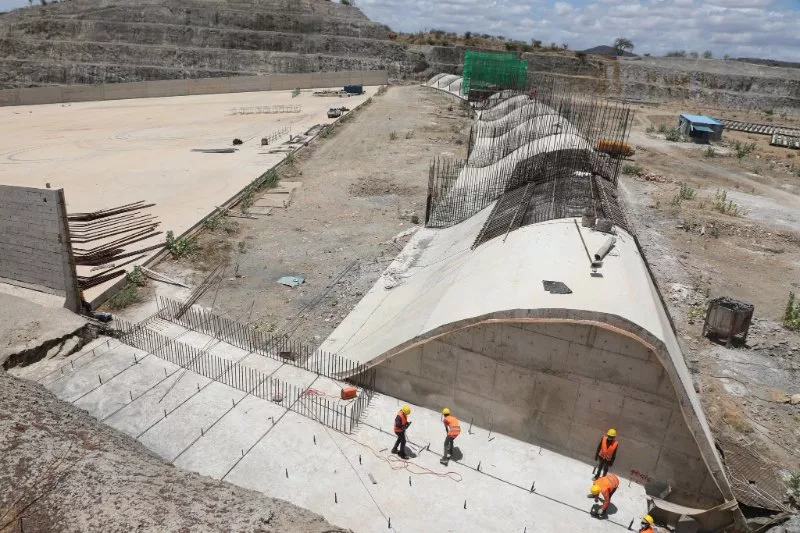
The Kenyan government has announced that water impounding at Thwake Dam is expected to begin in late January 2027, following significant progress on the first phase of the project, which is now more than 94 per cent complete.
The dam, located along the border of Makueni and Kitui counties, is a major national infrastructure project expected to improve water supply, support agricultural production and contribute to electricity generation in the region.
The project has received renewed financial support following the approval of additional funding by the government and the African Development Bank (AfDB) to facilitate the completion of outstanding construction works.
According to the project timeline outlined by the government, the dam’s gates are expected to be closed by the end of January 2027 to allow water to begin accumulating in the reservoir.
Water impounding is a critical stage in dam construction, marking the transition from major construction works to the controlled storage of water for the project’s intended uses.
The government is targeting the commissioning of the dam by April 2027, subject to sufficient water accumulation and the completion of the remaining works.
The project has received a financial boost after the Cabinet approved an additional KSh12.83 billion to support the completion of outstanding works.
The additional funding is expected to address financial challenges that previously slowed progress and help accelerate the remaining construction activities.
The government, working with development partners, aims to ensure that the project delivers its intended benefits to households, farmers and businesses across the region.
Once fully operational, Thwake Dam is expected to supply approximately 150,000 cubic metres of water daily, benefiting an estimated 1.3 million people across Makueni, Kitui and Machakos counties, as well as Konza Technopolis.
The increased water supply is expected to help address water shortages, improve access to clean water and support the growing demand from households, industries and urban developments.
Konza Technopolis, a flagship technology and innovation hub, is among the areas expected to benefit from the additional water resources as development and investment continue to expand.
Beyond supplying water for domestic and industrial use, the Thwake Dam project is designed to generate 20 megawatts of hydroelectric power.
The project is also expected to support irrigation, helping farmers expand agricultural production and reduce their reliance on unpredictable rainfall.
Improved access to irrigation water could strengthen food security, create economic opportunities and contribute to the long-term development of the lower eastern region.
The anticipated completion of Thwake Dam represents an important milestone in Kenya’s efforts to improve water security and expand critical infrastructure.
However, the achievement of the January 2027 impounding target and the April 2027 commissioning timeline will depend on the completion of the remaining works and the successful implementation of the project’s final stages.
If completed as planned, the dam is expected to become a key source of water, renewable energy and agricultural support for millions of Kenyans in the region.