



By Perez Karisa, June 24, 2026
A federal court in Texas has sentenced eight individuals to a combined total of approximately 450 years in prison over their involvement in a violent protest outside an Immigration and Customs Enforcement (ICE) detention facility, in a case that prosecutors have described as one of the most serious domestic terrorism-linked prosecutions in recent years.
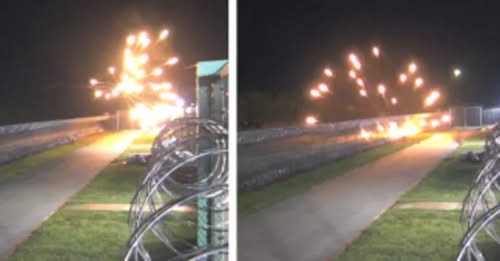
The ruling was issued following proceedings tied to a demonstration that took place outside the Prairieland Detention Center in Alvarado, Texas, where authorities say an initially organized protest escalated into a violent confrontation involving vandalism, explosive devices, fireworks, and gunfire.
According to court documents and statements from the U.S. Department of Justice, the unrest intensified when parts of the protest broke away from peaceful demonstrators and engaged law enforcement, resulting in a police officer being shot in the neck and injured during the chaos.
Prosecutors told the court that the defendants coordinated actions that included attempts to breach the facility, use of incendiary devices, and obstruction of federal operations. The charges brought against them included rioting, conspiracy to use explosives, obstruction of federal duties, attempted murder, and providing material support for terrorism-related activities.
The court identified Benjamin Hanil Song, a former U.S. Marine reservist, as the alleged leader of the group. He was sentenced to 100 years in prison after being convicted of attempted murder in connection with the shooting of the officer. Prosecutors argued that Song played a central role in planning and directing the escalation of the protest.
Maricela Rueda received a 70-year sentence for her involvement in coordinating activities during the incident, while Cameron Arnold, Savanna Batten, Zachary Evetts, Bradford Morris, and Elizabeth Soto were each sentenced to 50 years in prison for their roles in what the court described as organized violent conduct involving explosives and coordinated disruption of federal operations.
Another defendant, Daniel Rolando Sanchez-Estrada, received a 30-year sentence, which prosecutors noted reflected a comparatively lesser level of involvement in the most serious charges.
A ninth defendant, Ines Soto, along with several others who previously entered guilty pleas, is expected to be sentenced in proceedings scheduled for July 1.
The U.S. Department of Justice welcomed the ruling, with Acting Attorney General Todd Blanche describing the sentences as a firm response to what he called coordinated extremist violence targeting federal institutions and law enforcement officers.
However, defense attorneys and family members strongly criticized the outcome, arguing that the penalties were excessive and politically motivated. In a written statement presented during sentencing, Song maintained that he fired his weapon under the belief that an officer was about to shoot another protester, a claim prosecutors rejected.
The case has also reignited debate over how federal authorities classify political protest activity. The defendants have denied formal affiliation with Antifa, insisting they participated in what they describe as an immigration advocacy demonstration that escalated beyond their control.
Civil liberties advocates have raised concerns about the broader implications of the ruling, arguing that treating decentralized ideological affiliation as organized terrorism risks setting a precedent that could impact future protest-related prosecutions.
The case is expected to continue drawing national attention as additional defendants await sentencing later this week.