



By Erestinah Jane, June 30, 2026
The Strait of Hormuz has once again become the focal point of rising geopolitical tensions as the United States and Iran attempt to salvage a fragile ceasefire following weeks of intense military confrontation during the 2026 Middle East conflict.
Although a 60-day ceasefire agreement signed in mid-June by US President Donald Trump and Iranian President Masoud Pezeshkian temporarily halted large-scale hostilities, fresh exchanges of missiles and drones have renewed fears that the region could slide back into full-scale conflict, placing one of the world’s most important maritime trade routes under renewed threat.
The latest tensions have largely centered on the future governance of the Strait of Hormuz, a narrow waterway linking the Persian Gulf to the Gulf of Oman and the Arabian Sea.
Iran has maintained that the post-war security environment requires a new framework governing commercial navigation through the strait. Tehran has argued that vessels transiting the strategic waterway should comply with enhanced Iranian regulatory oversight and has floated proposals requiring shipping operators to observe new security procedures and transit arrangements.
The United States and its Gulf allies have strongly rejected any move that they believe could restrict freedom of navigation or give Iran greater influence over one of the world’s busiest maritime corridors. Washington insists that international shipping must continue without interference under established international maritime law.
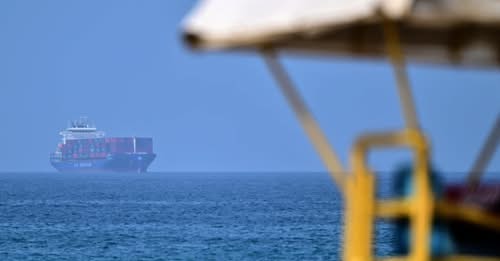
The ceasefire suffered a major setback after an Iranian projectile struck a commercial cargo vessel transiting near the Strait of Hormuz. President Donald Trump condemned the incident as a violation of the ceasefire agreement and authorized retaliatory military operations targeting Iranian air defence installations, drone storage facilities, radar systems and naval infrastructure believed to support operations in the Gulf.
Iran responded by launching missiles and drones toward US military facilities in Bahrain and Kuwait, while senior commanders of the Islamic Revolutionary Guard Corps (IRGC) warned that Tehran would respond forcefully to any further attacks on its territory or strategic interests.
Iranian officials have also warned that continued economic pressure and sanctions could prompt stronger measures affecting maritime traffic through the Strait of Hormuz. Military analysts note that the possibility of disruptions to commercial shipping remains one of the most significant sources of concern for global markets.
The Strait of Hormuz remains one of the world’s most strategically important energy corridors. Measuring approximately 21 miles (34 kilometres) at its narrowest point, it serves as the primary export route for crude oil and liquefied natural gas produced by Gulf nations, including Saudi Arabia, Iraq, Kuwait, Qatar and the United Arab Emirates.
Under normal conditions, roughly one-fifth of global crude oil exports and about 20 percent of the world’s liquefied natural gas shipments pass through the strait each day, making its security critical to international energy markets.
Maritime activity has reportedly declined following heightened security concerns and warnings about possible naval hazards in the Gulf. International shipping companies have increased security measures, while several insurers have raised war-risk premiums for vessels operating in the region.
Some Gulf countries have also expanded the use of alternative export routes that bypass the Strait of Hormuz where possible. Commercial operators have increasingly relied on ports and shipping corridors through Oman and pipeline infrastructure leading to the Red Sea and Arabian Sea in an effort to reduce dependence on the contested waterway.
The shift reflects broader efforts by regional governments to minimize the economic impact of any prolonged disruption in the Gulf while ensuring uninterrupted energy exports to global markets.
Diplomatic efforts to restore calm continue behind the scenes, with regional mediators seeking to bring both Washington and Tehran back to the negotiating table. Pakistan and several Gulf states are reportedly supporting renewed dialogue, while discussions are expected to continue in Doha, Qatar, with the aim of strengthening the ceasefire and establishing a more durable framework for maritime security and regional stability.
Despite those diplomatic efforts, analysts warn that the situation remains highly volatile. Any further military confrontation or attack on commercial shipping could rapidly undermine ongoing negotiations, disrupt global energy supplies and trigger wider instability across the Middle East.