



By Joshua Otieno
November 3, 2027
For Precious Karimi, taking her sick child to hospital was supposed to be a moment when her Social Health Authority (SHA) cover would ease the financial burden of accessing medical care.
Instead, she says she was forced to dig deeper into her pockets to secure treatment, raising questions about whether the scheme is delivering the financial protection promised to ordinary Kenyans.
The Tharaka Nithi County resident recalls being asked to pay KSh20,000 at the hospital before being informed that her SHA cover could not immediately be processed because of network challenges.
Despite being registered under the scheme, Karimi says the experience left her questioning its effectiveness.
“I went to the hospital when my child was sick and was asked to pay KSh20,000, which I paid. However, I was later informed that the SHA network was not working and that I had to wait for it to be restored before I could receive the services,” she said.
Her frustrations did not end there. After undergoing medical tests, she says she was informed that some examinations and prescribed medicines were not covered, leaving her responsible for the additional costs.
She also raised concerns over the availability of essential medicines, saying patients could be required to purchase prescribed drugs from pharmacies outside the hospital, even during emergencies.
“There were medicines I needed at around midnight, but I was told I had to buy them before the patient could receive treatment. At that time, pharmacies were closed, and I had neither money nor somewhere to purchase the medicines. I kept wondering why I had SHA if I still had to look for money to buy medication,” she said.
For Karimi, the experience raises a fundamental question about the purpose of health insurance if patients must still struggle to raise money when seeking treatment.
Her concerns are shared by other residents in the county, including Anthony Mugembe Isaiah, who also questions whether SHA is adequately meeting the needs of its beneficiaries.
Isaiah says he was required to pay for certain medical examinations and prescribed medicines despite being registered under the scheme.
After visiting hospital and undergoing tests, he was reportedly informed that some of the services and medicines he needed were not covered, forcing him to meet the costs personally.
At times, he says, the financial burden made it difficult to obtain prescribed medication, particularly when pharmacies were already closed.
“I went to the hospital and underwent tests, only to be informed that some examinations and medicines had to be paid for separately. At times, I did not have money to buy the prescribed medication, and the pharmacies were already closed. I wondered how SHA could help patients if they still had to struggle to pay for essential medicines and tests,” he said.
Isaiah is appealing to the government to consider the circumstances of ordinary citizens, particularly small-scale traders and households with limited financial resources, when implementing the healthcare financing system.
For some families, however, concerns surrounding SHA go beyond the cost of medicines and diagnostic examinations. They also extend to uncertainty over eligibility and when medical cover becomes active.
Florence Katomi recalls a distressing experience during childbirth, when she expected her husband’s regular SHA contributions to cater for her medical needs.
However, upon arriving at the hospital to deliver, she says she was informed that her coverage was not yet active and that she had to wait for a specified period before accessing the benefits.
The situation left her family scrambling to raise money at a time when she urgently needed medical attention.
“Three months ago, I went to hospital to deliver, believing that my husband’s SHA contributions would cover my medical needs. However, I was informed that SHA could not cover my medication because I had to wait for a specific period before my coverage became effective,” she said.
According to Katomi, the hospital required KSh3,000 before she could receive treatment, forcing her husband to look for the money despite having made regular contributions.
“My husband had to go and look for that money so that I could be attended to. During that waiting period, I almost lost my unborn child. Thankfully, I survived and delivered safely. I kept asking myself why I was required to pay KSh3,000 when I contribute to SHA every month through my husband. What is the importance of paying every month if the cover cannot help when I need it?” she questioned.
Her account highlights the anxiety families may experience when uncertain about their coverage status, particularly during emergencies and maternity-related healthcare needs.
The concerns raised by the three residents come at a time when Tharaka Nithi County has recorded considerable progress in SHA registration.
According to county figures, approximately 178,000 residents, representing 67 per cent of the population, had registered under the scheme, placing the county sixth nationally in registration progress.
The registration drive has been accompanied by efforts to expand access to affordable primary healthcare.
Registered residents can access free primary healthcare services at public dispensaries and Level Two health centres, while outpatient services at designated Level Three facilities are also provided under the county’s healthcare arrangements.
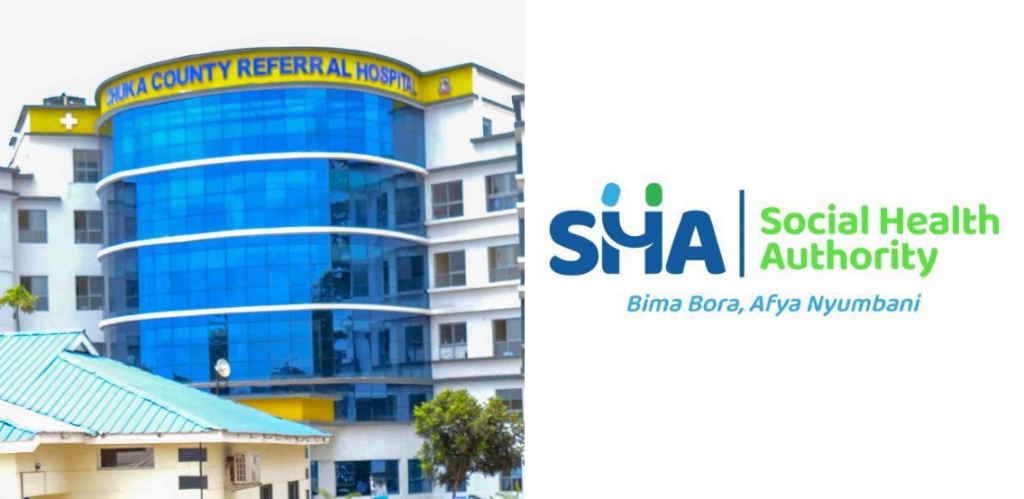
The county has also highlighted specialised healthcare services, including renal dialysis at Chuka County Referral Hospital, as part of efforts to improve access to treatment for residents with chronic conditions.
These interventions demonstrate the potential benefits of the new healthcare financing system. However, the experiences narrated by Karimi, Isaiah and Katomi raise questions about the gap between registration figures and the actual experiences of patients seeking treatment.
While registration is an important measure of progress, it does not independently establish whether beneficiaries can access all the services they need, whether essential medicines are available or whether they are protected from unexpected medical expenses.
The concerns also bring into focus the importance of clear communication between healthcare providers and patients regarding covered services, benefit limits, eligibility requirements and any additional charges.
The debate surrounding SHA also touches on the financial relationship between the authority and healthcare providers.
In early 2026, concerns emerged over discrepancies between claims submitted by Chuka County Referral Hospital and the amounts approved by SHA.
The matter attracted scrutiny from the Senate following questions over the hospital’s claims and the effect of the discrepancies on its finances.
The concerns included documentation challenges, data integrity issues and the application of reimbursement guidelines.
Although these matters require examination on their own merits, they raise questions about how reimbursement processes affect the ability of healthcare facilities to maintain consistent services.
Ultimately, patients depend on hospitals for treatment regardless of the administrative and financial challenges between healthcare providers and the insurance authority.
For residents like Karimi, Isaiah and Katomi, the central question remains whether being registered under SHA will translate into timely, affordable and reliable access to the healthcare they need.