



By Doris Moraa, June 23, 2006
MOMBASA, KENYA, June 24, 2026 — Secondary school principals across the country have renewed calls for a review of the current secondary school fees structure, warning that rising operational costs and inflation are placing immense pressure on schools and threatening the quality of education.
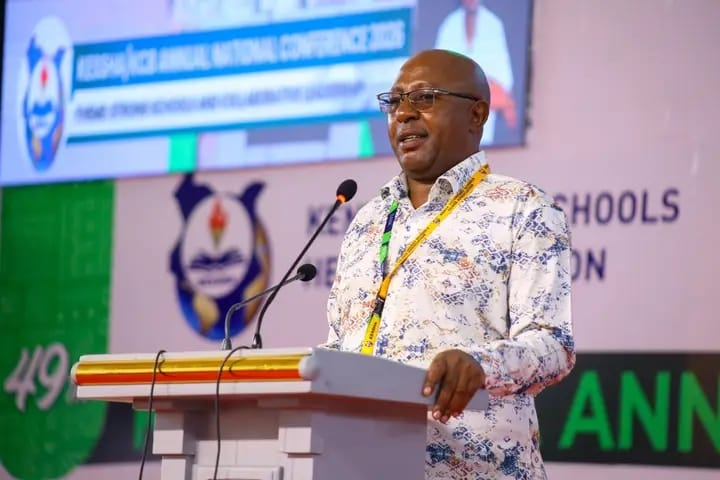
The appeal was made during the 49th Kenya Secondary School Heads Association (KESSHA) Annual National Conference in Mombasa, where school heads expressed concern that the existing funding framework is no longer sufficient to sustain effective learning and curriculum implementation.
Speaking during the conference, KESSHA National Chairman Willie Mwangi said schools are grappling with escalating costs brought about by inflation and the additional demands associated with the implementation of the Competency-Based Education (CBE) curriculum.
Mwangi noted that the current capitation provided by the government falls short of meeting the actual cost of educating learners, forcing many schools to operate under severe financial constraints.
“Schools are struggling to meet basic operational costs. The cost of food, electricity, water, maintenance of infrastructure and other essential services has gone up significantly, yet the funding framework has remained largely unchanged,” he said.
He observed that institutions are finding it increasingly difficult to provide quality education while simultaneously catering for tuition, boarding facilities, co-curricular activities, learning materials and infrastructure maintenance.
According to the principals, the shift towards Competency-Based Education has also increased the need for additional resources, including modern teaching equipment, digital infrastructure and specialized learning materials, all of which require increased funding.
The school heads are proposing the adoption of a unit-cost formula that would determine the actual cost of educating a learner. Under the proposed model, funding would be based on the real expenses incurred by schools, ensuring institutions receive adequate resources to deliver quality education.
Currently, the government provides an annual capitation of Sh22,244 per learner in secondary schools, while parents cater for boarding and other operational expenses depending on the category of the institution. However, principals argue that the amount is no longer realistic in the face of changing economic conditions.
They further warned that continued underfunding could negatively affect learning outcomes and compromise the gains made in expanding access to secondary education.
The conference brought together education stakeholders from across the country to deliberate on challenges facing the sector and explore strategies aimed at improving education standards.
Among the issues discussed were school financing, implementation of the Competency-Based Education curriculum, infrastructure development, teacher welfare and measures to enhance academic performance.
School heads expressed optimism that the government would consider their recommendations and engage stakeholders in developing a sustainable and equitable funding model capable of addressing the evolving needs of schools and learners.
They emphasized that investing adequately in education remains critical to national development and urged policymakers to act swiftly to ensure schools remain financially stable and capable of providing quality and inclusive education to all learners.