



By Brian Said Iha, July 21, 2026
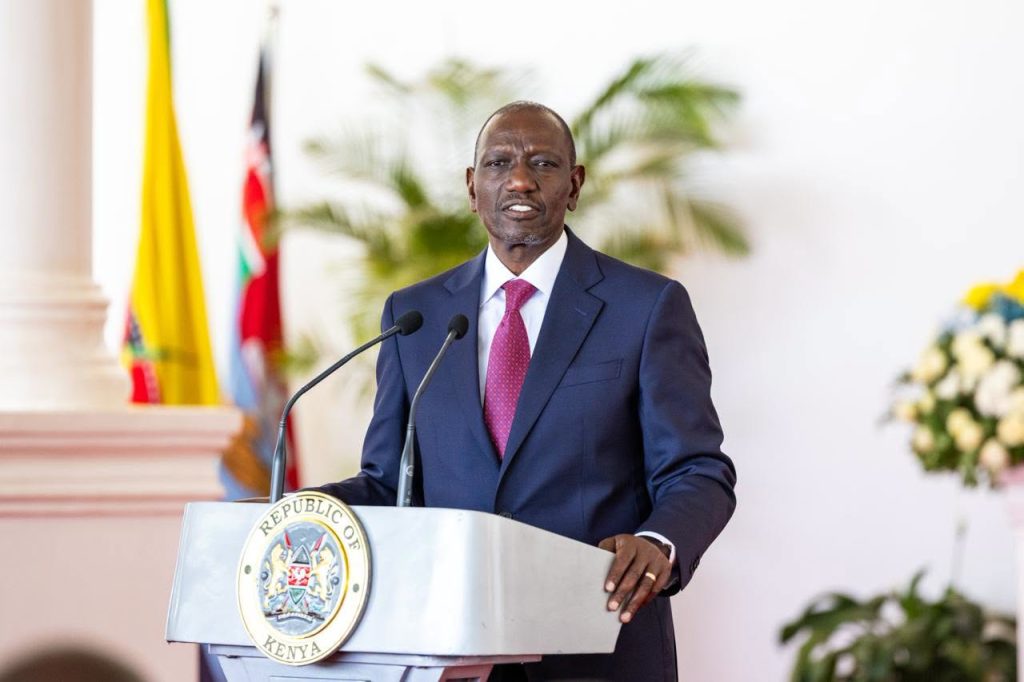
President William Ruto has received a strategic policy document titled “Developing a New National Vision: Journey to a First World Economy” during a high-level meeting at State House, Nairobi, as the government seeks to chart a new long-term development path beyond the objectives of Vision 2030.
The thought-leadership presentation outlines a roadmap for accelerating Kenya’s economic transformation through policy reforms, inclusive growth and the continued implementation of the Bottom-Up Economic Transformation Agenda (BETA).
The report was presented by a delegation of leading scholars, policy experts and government officials led by Kisumu Governor Prof. Anyang’ Nyong’o.
Other members of the delegation included Prof. Karuti Kanyinga, Prof. Oduor Wanyande and Prof. Michael Chege, alongside policy strategists Denis Onyango and George Omondi. They engaged President Ruto and members of the President’s Council of Economic Advisors on strategies for positioning Kenya as a globally competitive, high-income economy.
According to the report, Kenya can accelerate its transition to first-world economic status through deliberate investments in industrialisation, technology, infrastructure, agriculture and human capital while strengthening fiscal discipline and institutional reforms.
Among the key proposals is maintaining the country’s annual inflation rate at about five per cent to cushion households from rising living costs and create a stable economic environment for businesses and investors.
The blueprint also recommends creating at least 1.2 million jobs every year to tackle youth unemployment, stimulate entrepreneurship and reduce income inequality across the country.
To finance long-term development, the report proposes leveraging the recently enacted Sovereign Wealth Fund Bill, 2026, together with the National Infrastructure Fund, to mobilise more than KSh5 trillion for investments in public-private partnerships, agro-industrialisation, manufacturing and technology-driven industries.
Food security also features prominently in the strategy, with the document proposing the expansion of irrigation infrastructure across approximately 2.5 million acres through the construction of major dams and water projects to reduce reliance on food imports and strengthen agricultural production.
The report further recommends increasing Kenya’s revenue collection to 19.7 per cent of the Gross Domestic Product (GDP) by the 2027/2028 financial year while strengthening foreign exchange reserves to enhance the stability of the Kenya shilling against external economic shocks.
President Ruto welcomed the proposals, saying they complement the government’s ongoing economic reforms under the Bottom-Up Economic Transformation Agenda.
He reaffirmed his administration’s commitment to implementing policies that promote sustainable economic growth, create employment opportunities and improve the livelihoods of Kenyans.
The President said Kenya has the potential to join the ranks of high-income economies by embracing innovation, strengthening institutions and maintaining prudent fiscal management.
Drawing comparisons with the economic transformation of countries such as Singapore, South Korea and Malaysia, Ruto said Kenya’s journey toward becoming a globally competitive economy remains achievable through strategic planning, technological advancement and disciplined implementation of national development programmes.
He added that collaboration between government, academia, the private sector and development partners will be critical in shaping policies capable of driving inclusive growth and positioning Kenya as a regional economic powerhouse.
The presentation comes as the government continues to implement reforms aimed at boosting investment, enhancing productivity and laying the foundation for long-term economic prosperity beyond the Vision 2030 development framework.