



By Doris Moraa, July 15, 2026
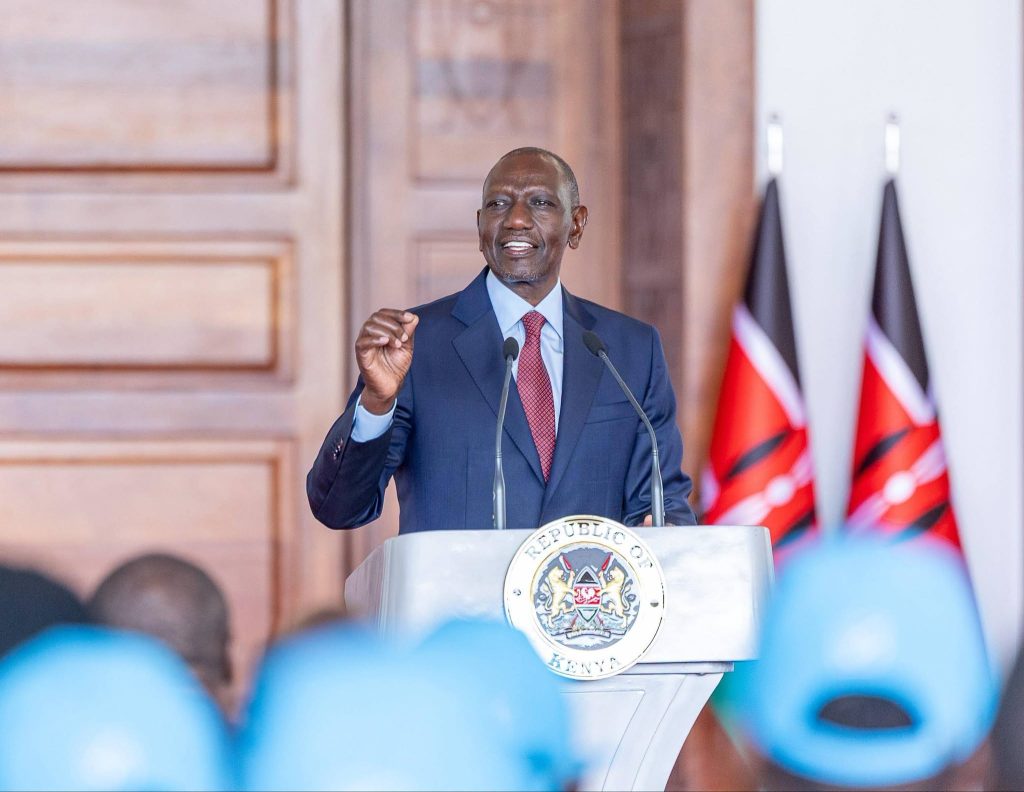
President William Ruto has challenged eligible voters in the Rift Valley to register in large numbers ahead of the 2027 General Election, expressing concern that nearly 1.8 million eligible residents in the region have yet to enlist as voters.
Speaking during a burial ceremony in Bomet County, the President said the low voter registration in his political stronghold was a major concern, warning that failure by eligible citizens to register could weaken the region’s political influence in future elections.
Ruto described the situation as a significant political burden, noting that while he continues to campaign and mobilize support across the country, his own backyard risks lagging behind in voter participation.
“It is worrying that millions of our young people who qualify to vote have not registered. We cannot afford to be complacent because every vote counts in determining the country’s future,” he said.
The President urged political leaders, religious organizations and community groups to support civic education campaigns aimed at encouraging more Kenyans, particularly first-time voters, to register with the Independent Electoral and Boundaries Commission (IEBC).
He emphasized that voter registration is not merely a political exercise but a constitutional right that enables citizens to participate in choosing leaders and shaping national development.
The remarks come as political activity intensifies following the IEBC’s unveiling of its roadmap to the 2027 General Election, with parties and leaders shifting focus toward expanding their voter bases.
At the same time, Western Kenya has emerged as a key political battleground, with local leaders launching voter registration drives aimed at increasing the region’s influence ahead of the polls.
Several leaders from the region have urged eligible residents to register in large numbers, arguing that a higher voter turnout would strengthen Western Kenya’s bargaining power in national politics and development negotiations.
The renewed voter mobilization campaigns are expected to intensify as the IEBC prepares for the next phase of voter registration targeting millions of new voters before the 2027 General Election.
Political analysts say the competition to increase voter numbers is likely to shape alliances and campaign strategies over the next two years, as parties seek to consolidate support in regions considered decisive in determining the outcome of the presidential contest.
The IEBC has indicated that expanding the voters’ register remains one of its major priorities under the 2025–2027 Election Operations Plan, with a target of registering approximately 6.3 million new voters before the next General Election.
With political campaigns gradually gathering momentum, leaders across the country are increasingly urging eligible citizens to obtain national identity cards, register as voters and actively participate in the democratic process.