



By Martha Okoth ,27 ,October 2026
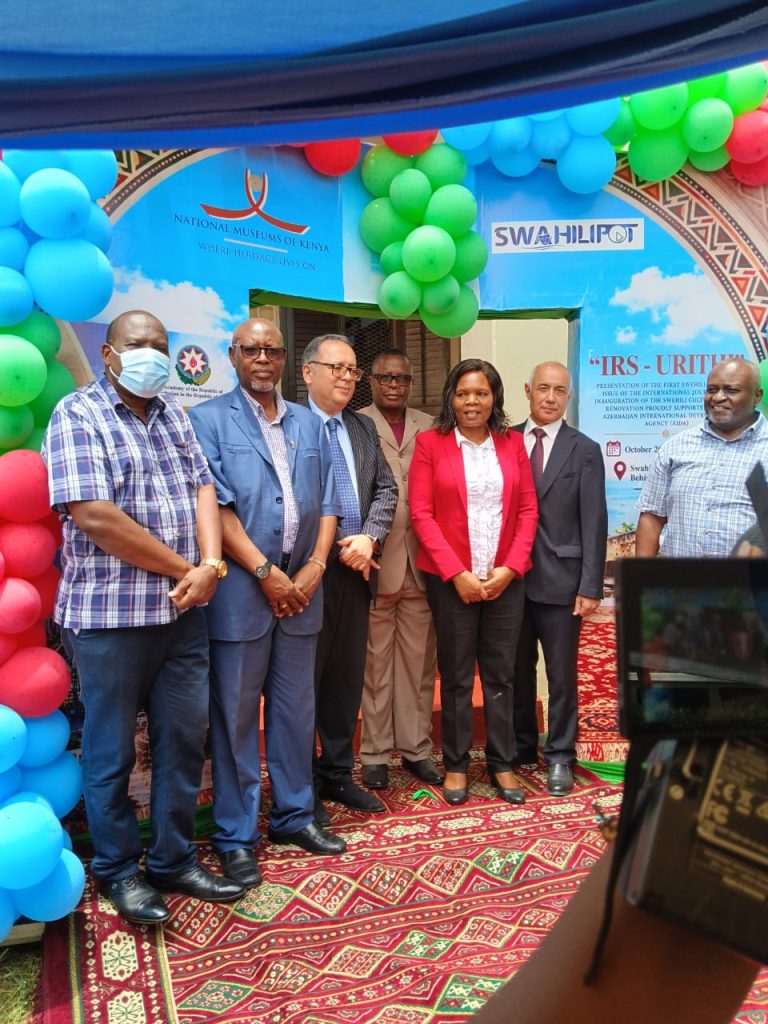
The National Museums of Kenya has launched the renovated Swahili Library at Fort Jesus, marking a significant milestone in the preservation of Kenya’s coastal cultural heritage and the promotion of Swahili history, research and knowledge.
Speaking during the launch, the Director General of the National Museums of Kenya, Prof. Mary Gikungu, expressed her heartfelt appreciation to His Excellency Sultan Hajiyev, Ambassador of the Republic of Azerbaijan to Kenya, and the Azerbaijan International Development Agency (AIDA) for their support towards the renovation of the historic library.
Prof. Gikungu highlighted the journey that transformed the renovation project from an idea into reality, acknowledging the contributions of Ambassador Sultan, Madam Charlene Ruto and other partners whose involvement helped advance the initiative.
She recalled that in December 2025, Ambassador Sultan visited her office for discussions on cultural heritage conservation and development. The meeting, she noted, demonstrated his commitment to supporting Kenya’s cultural institutions and preserving its rich heritage.
A week later, Ambassador Sultan requested a project proposal and pledged his support. The renovation of the Swahili Library was among the proposed initiatives. Before the end of December 2025, he donated US$50,000, enabling the National Museums of Kenya to prioritize the library’s renovation as one of its key projects.
Recognizing the Ambassador’s commitment to culture and heritage, the National Museums of Kenya subsequently invited him to visit the coastal region from 15 to 17 January 2026. During the visit, the delegation toured the former library site, where the need for renovation was evident.
Prof. Gikungu recalled that despite the building’s poor condition, Ambassador Sultan reassured the team that the library would be renovated through a partnership programme with AIDA.
She also commended the National Museums of Kenya Board for its support and recognized the contributions of Madam Charlene Ruto, Ambassador Sultan and his team in facilitating the partnership that enabled the project’s implementation.
Special appreciation was extended to Mr. Mahmoad Noor, Chief Mentor of the Swahili Pot Hub Foundation, for his contribution to cultural knowledge preservation and conservation. Prof. Gikungu emphasized that partnerships between cultural institutions, development agencies and other stakeholders are essential to safeguarding heritage and ensuring that valuable knowledge is preserved for future generations.
The renovated Swahili Library is expected to serve as an important resource for scholars, researchers, students and other audiences interested in Swahili culture, history and heritage.
Prof. Gikungu reaffirmed the National Museums of Kenya’s commitment to research and knowledge preservation, noting that the institution established its research centre in 2010. The organization currently operates four research centres located in Nairobi, Malindi, Lamu and Mombasa.
Looking ahead, she underscored the importance of digitizing materials held within the research centres to improve access to information and respond to the growing demand for educational and research resources, particularly among primary and secondary school learners.
According to Prof. Gikungu, digitization will help preserve valuable historical and cultural materials while making them more accessible to researchers, educators and learners.
The launch of the renovated Swahili Library at Fort Jesus underscores the importance of international cooperation and institutional partnerships in protecting Kenya’s cultural heritage.
Through the support of Azerbaijan and AIDA, alongside the commitment of the National Museums of Kenya and its partners, the project represents an investment in the preservation of Swahili knowledge, history and cultural identity.
The renovated facility is expected to strengthen research, support learning and provide future generations with greater opportunities to explore and appreciate the rich cultural heritage of Kenya’s coastal communities.
The initiative further demonstrates the value of collaborative efforts in preserving historic institutions and ensuring that Kenya’s cultural resources remain accessible to present and future generations.