



By Perez Karisa, June 25, 2026
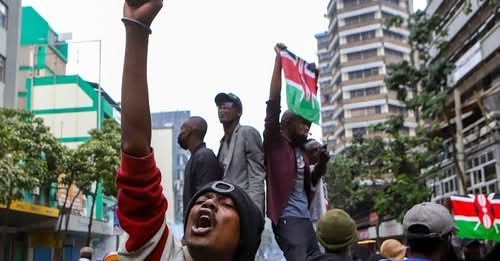
The National Police Service has assured the public of heightened safety and security during Thursday’s Gen Z memorial processions, stating that while the government fully recognizes the constitutional right to peaceful assembly, it will apply a strict zero-tolerance approach to any acts of violence, looting, or destruction of property.
Deputy Inspector General of Police Eliud Lagat and Interior Cabinet Secretary Kipchumba Murkomen reiterated that security agencies have been instructed to differentiate between peaceful demonstrators and criminal elements allegedly seeking to infiltrate the memorial gatherings. They emphasized that officers deployed across the country have clear operational orders to respond decisively to any attempts to disrupt public order, while allowing lawful and peaceful assemblies to proceed.
However, despite the assurances, Thursday morning operations by law enforcement agencies have resulted in widespread disruption, particularly in Nairobi and surrounding metropolitan areas, where major transport corridors have been effectively sealed off.
🚧 Nairobi CBD Completely Encircled
In Nairobi, police mounted a large-scale security cordon around the Central Business District, blocking access through all major entry routes. Key highways including Waiyaki Way, Thika Superhighway, Mombasa Road, Jogoo Road, and Ngong Road were heavily barricaded using police vehicles, razor wire, and anti-riot units.
As a result, thousands of commuters were unable to access the city centre. Public Service Vehicles (PSVs) were turned away at multiple checkpoints, forcing workers to disembark and walk long distances to reach offices and business premises.
Many residents described the situation as “paralyzing,” noting that early morning commuters were caught off guard despite prior government statements indicating that normal operations would continue.
🚶 Severe Commuter Disruptions
The lockdown caused significant hardship for daily wage workers, students, and office employees who rely on public transport. Matatus and buses were halted at various entry points, including along Waiyaki Way and the Kangemi–Westlands corridor, forcing commuters to either turn back or proceed on foot.
Traffic buildup was also reported along feeder roads as vehicles accumulated outside blocked junctions. Some commuters reportedly spent hours walking to alternative routes in attempts to access transport into the city.
⚠️ Preemptive Arrests Raise Concerns
Tensions escalated further following the arrest of activist Bob Njagi, who was reportedly detained less than 24 hours before the memorial events. Police accused him of mobilizing public participation in the processions, though human rights groups have criticized the arrest as politically motivated.
Legal representatives and civil society organizations argue that such preemptive detentions undermine constitutional freedoms, particularly the rights to peaceful assembly, expression, and association.
⚖️ Civil Society Issues Strict Oversight Demands
In response to the heavy security deployment, the Law Society of Kenya (LSK), alongside the Police Reforms Working Group, issued a detailed seven-point advisory aimed at ensuring accountability and restraint during police operations.
Among their key recommendations were:
- Visible Identification: All officers must display clear name tags and force numbers, with a strict prohibition on masked personnel during operations.
- Use of Force Restrictions: Authorities were warned against the use of live ammunition and urged to avoid excessive force against peaceful demonstrators.
- Accountability Measures: Station commanders were reminded that they will be personally liable for any violations, including deaths or injuries resulting from police actions.
- Protection of Essential Services: Journalists, medical personnel, and human rights observers must be granted unrestricted access to monitor events and provide emergency support where necessary.
🔎 Broader National Context
The memorial processions are being held across multiple towns in remembrance of victims linked to the June 25, 2024 demonstrations, which saw widespread protests over governance, economic pressure, and youth grievances. This year’s commemorations have drawn significant attention, with both organizers and authorities taking heightened positions on security and public participation.
While police maintain that the deployments are preventive and aimed at avoiding destruction of property, civil society groups argue that the scale of roadblocks and arrests is effectively restricting the right to peaceful protest.