



By Joshua Otieno | July 3, 2026
ISIolo, KENYA — The Kenya National Highways Authority (KeNHA) has intensified stakeholder engagement forums in Meru and Isiolo counties as preparations gather pace for the implementation of the multi-billion-shilling Horn of Africa Gateway Development Project (HoAGDP), a transformative infrastructure programme expected to reshape northern Kenya.
The consultations are aimed at ensuring that communities living along the Isiolo–Mandera Corridor play a direct role in shaping socio-economic infrastructure planned under the project.
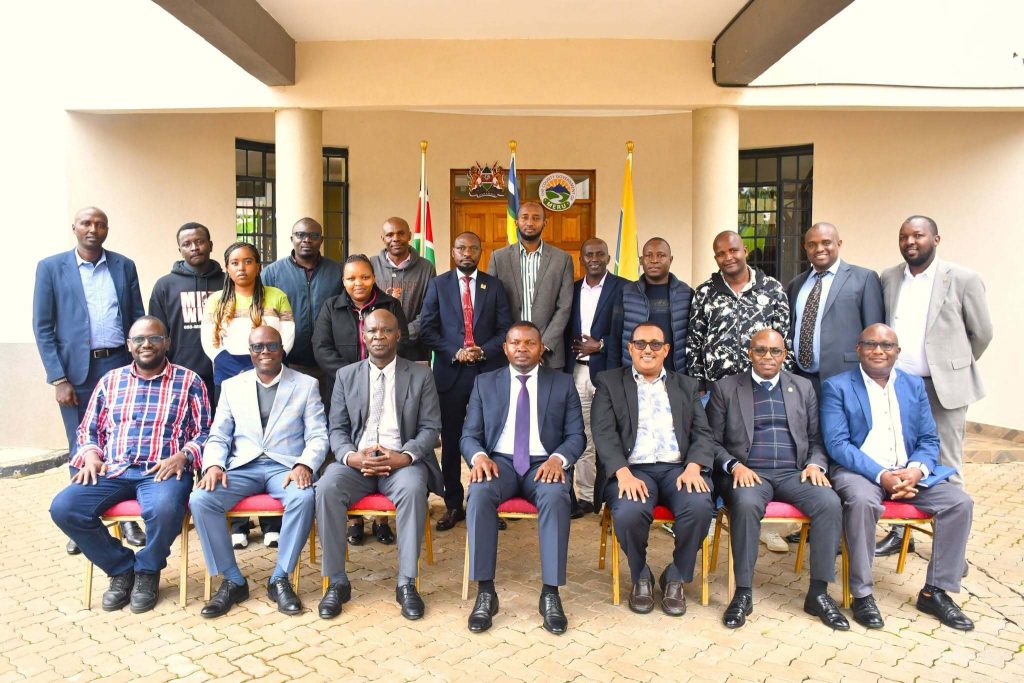
Led by KeNHA Director General Eng. Eric Wambua, the forums have brought together county governments, development partners, technical experts and community representatives to align infrastructure investments with local development priorities.
Among the key partners involved are the North and Northeastern Development Initiative (NEDI), the Frontier Counties Development Council (FCDC), Infras Consultants and county leadership from Meru and Isiolo.
Officials say the engagement process is designed to strengthen collaboration between national and county governments while ensuring that communities benefit directly from the project through improved infrastructure and economic opportunities.
The Horn of Africa Gateway Development Project, valued at approximately KSh168.2 billion, seeks to fully pave the 740-kilometre Isiolo–Wajir–Mandera highway, one of the largest road infrastructure investments currently underway in the country.
The corridor passes through Meru, Isiolo, Garissa, Wajir and Mandera counties, and is expected to significantly improve connectivity, boost trade and accelerate economic development across Kenya’s northern frontier.
According to project officials, the highway has been divided into eleven construction packages to allow simultaneous implementation across multiple sections.
The Isiolo–Kulamawe section, which forms part of the first phase, has reached 54.29 percent completion, while the Kulamawe–Modogashe segment stands at 41.7 percent complete.
Construction is also progressing on the Wajir–Tarbaj and Tarbaj–Kutulo sections, where groundwork and pavement development continue following the allocation of additional funding to accelerate implementation.
Meanwhile, the Modogashe–Samatar segment has received fresh approvals aimed at fast-tracking contractor deployment and unlocking previously delayed works.
The project further includes the upgrading of the El Wak–Rhamu and Rhamu–Mandera sections to international trunk road standards, improving access to border areas and strengthening trade links with neighbouring Somalia and Ethiopia.
Beyond road construction, the initiative incorporates a wide range of supporting infrastructure designed to improve livelihoods and stimulate economic growth across the region.
These include the installation of more than 1,000 kilometres of fibre-optic internet cable, construction of town loop roads, security infrastructure and 38 community-based development projects focusing on healthcare, education, water supply and social amenities.
In Wajir County, residents are expected to benefit from new solar-powered boreholes, improved water supply systems, roadside health facilities, upgraded schools and modern community centres.
The project also includes the construction of town bypasses and urban road networks aimed at improving mobility and supporting commercial activities.
Among the flagship urban developments is a KSh45.5 billion urban roads programme being implemented by the Kenya Urban Roads Authority (KURA), which will upgrade approximately 65 kilometres of roads across 31 locations in Wajir Town.
Funding for the corridor has been secured through a partnership involving the Government of Kenya, the World Bank and the African Development Bank (AfDB).
Officials indicate that more than KSh100 billion has already been disbursed under the first phase of the programme, while additional financing amounting to KSh71.5 billion was approved in recent months to accelerate implementation.
The African Development Bank has separately committed KSh27.5 billion towards the El Wak–Rhamu multinational road section.
Construction activities officially commenced in 2022 following preparatory works and financing arrangements that began in 2020.
The Government expects key sections of the highway between Isiolo and Modogashe to be completed by 2028, while full completion of the entire corridor is targeted by 2030.
Officials say the project will not only transform transportation but also unlock investment opportunities, improve access to essential services and position northern Kenya as a major trade gateway linking East Africa with the Horn of Africa region.