


By Mumo Judah, Kilifi, June 2, 2026
Kilifi County has emerged as the best-performing coastal county in the implementation of the Kenya Marine Fisheries and Socio-Economic Development (KEMFSED) project, strengthening its position as a national leader in blue economy development and coastal resource management.
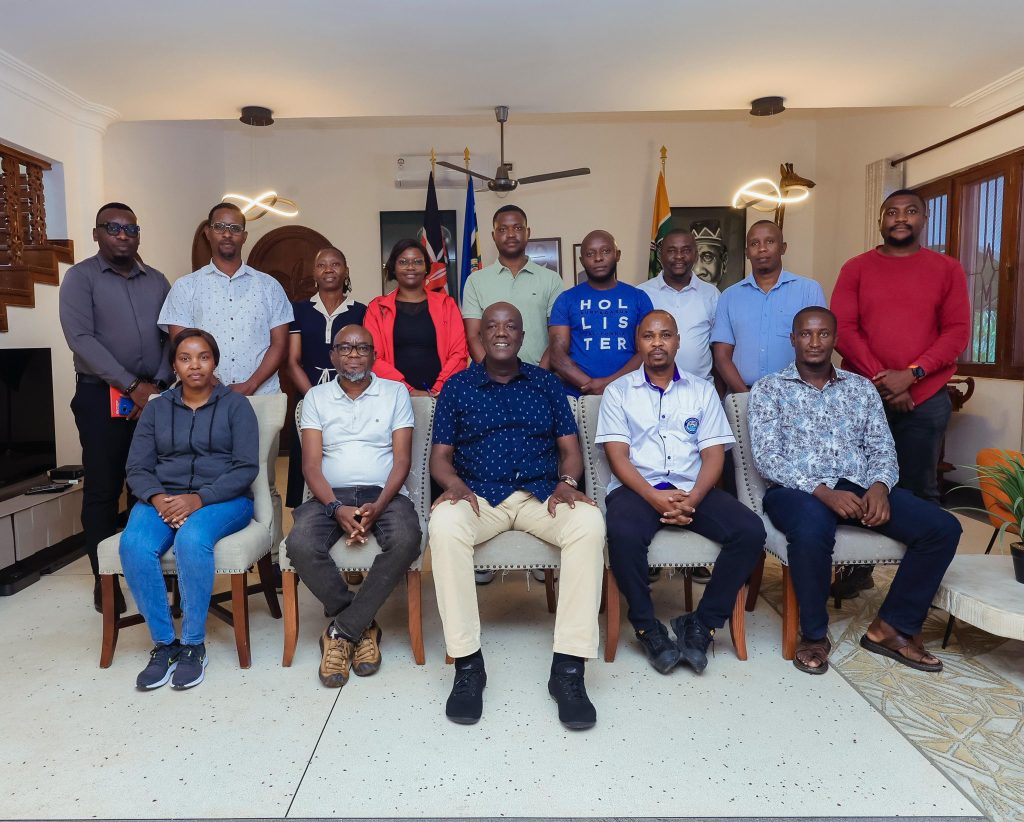
The recognition was confirmed following a strategic review meeting between Kilifi Governor Gideon M. Mung’aro and a delegation from the KEMFSED national coordination team led by Project Coordinator Geoffrey Wabomba, who assessed the progress of the multi-county programme funded by the World Bank.
The KEMFSED initiative is a flagship development programme implemented across Kenya’s coastal counties of Kilifi, Mombasa, Kwale, Lamu and Tana River, aimed at improving marine fisheries management, expanding alternative livelihoods and strengthening institutional capacity within coastal communities.
Funded through a $100 million (approximately KSh13 billion) World Bank loan, the programme is anchored under the State Department for Blue Economy and Fisheries within the Ministry of Mining, Blue Economy and Maritime Affairs, and is considered central to Kenya’s long-term maritime development strategy.
According to the assessment, Kilifi County stood out due to its strong execution capacity, efficient use of allocated funds and effective engagement of grassroots community structures in project delivery.
Officials noted that the county has made significant progress in strengthening Beach Management Units (BMUs), transforming them from informal fishing groups into structured community enterprises capable of managing fisheries resources and participating in commercial activities.
The county government has also channelled substantial resources into Common Interest Group (CIG) grants, supporting community-led initiatives such as crab farming, seaweed cultivation and eco-tourism projects along the coastline. These interventions are aimed at diversifying income sources for coastal households that have traditionally depended on small-scale fishing.
In addition, Kilifi has invested in upgrading key fisheries infrastructure, including cold storage facilities, modern fish landing sites and improved fishing equipment, a move expected to reduce post-harvest losses and increase the value of fish products supplied to local and regional markets.
The KEMFSED programme is designed to strengthen the entire marine value chain, from production to processing and marketing, while also promoting sustainable use of marine resources in line with climate resilience goals.
During the meeting, Governor Mung’aro welcomed the recognition, saying it reflects the county’s commitment to responsible resource management and inclusive economic growth driven by the blue economy agenda.
He was joined by Project Coordinator Geoffrey Wabomba, who commended Kilifi for setting what he termed a benchmark in implementation efficiency and community participation, urging other coastal counties to adopt similar approaches to accelerate project outcomes.
Following the announcement, both county and national officials indicated plans to convene a high-level Blue Economy Investment Forum aimed at attracting private sector participation in coastal development projects.
The forum is expected to focus on scaling up investments in fish processing industries, expanding deep-sea fishing operations and promoting value addition in marine products, with the goal of creating employment opportunities for coastal youth.
Officials also highlighted the need to integrate environmental conservation efforts, including mangrove restoration and marine ecosystem protection, into commercial blue economy ventures to ensure long-term sustainability.
The KEMFSED programme currently spans five coastal counties, with Kilifi’s coastline—stretching over 100 kilometres—serving as a key focus area for infrastructure upgrades, community empowerment and fisheries management interventions.
With its top ranking, Kilifi is now expected to play a leading role in shaping the next phase of Kenya’s blue economy agenda, as the Government seeks to transform the coastal region into a major hub for sustainable marine-based economic activity.