



By Timothy Nzai | February 25, 2026
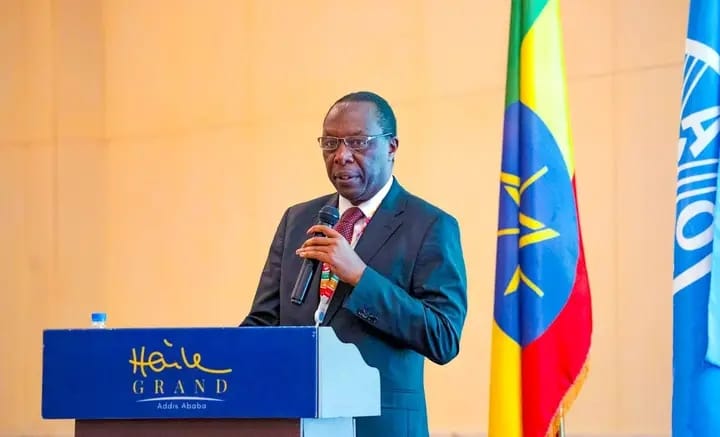
Gitonga Mugambi led Kenya’s delegation at the Africa Regional Exchange on Scaling Solutions for Decoupling Agricultural Production from Deforestation, held in Addis Ababa, Ethiopia. The meeting brought together African leaders to discuss how to increase food production without destroying forests. He was joined by Eyasu Elias and Orlando Sosa. The leaders agreed that African countries must work together to solve shared environmental and agricultural challenges.
In his speech, Mugambi highlighted that Africa is at a critical stage. Countries must increase food production while protecting forests and natural ecosystems. He emphasized that forests play a vital role in protecting water sources, preventing soil erosion, supporting biodiversity, aiding pollination, and maintaining a stable climate for farming. When forests are destroyed, agriculture suffers and food security is threatened.
Mugambi noted that Kenya’s forest cover is about 8.83 percent, below the constitutional target of 10 percent. He explained that farming expansion and infrastructure projects are putting pressure on forests, making it necessary to find balanced and long-term solutions.
Kenya is responding through the National Landscape and Ecosystem Restoration Strategy (2023–2032), which aims to restore 10.6 million hectares of degraded land and increase tree cover to 30 percent by 2032. This initiative is supported by the Presidential 15 Billion Tree Growing Programme.
Mugambi stressed that tree planting is not just about planting trees but also about restoring land productivity and reducing the need to clear new land for farming. He emphasized the importance of proper monitoring systems to track deforestation and improve transparency. He also called for inclusive participation from counties, community forest groups, and farmers.
He concluded by highlighting that secure land ownership, access to finance, better extension services, and fair markets are essential to ensure conservation efforts are successful and sustainable.