



By Joshua Otieno | March 13, 2026
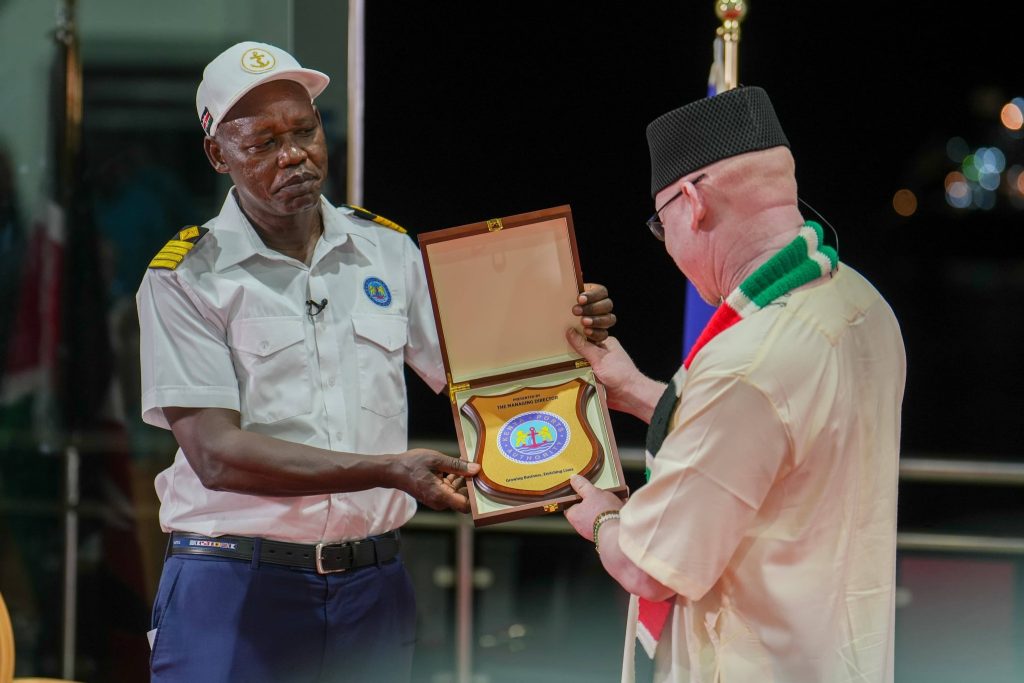
Government Spokesperson Hon. (Dr.) Isaac Mwaura held a government media engagement at the Kenya Ports Authority in Mombasa, where he hosted KPA Managing Director Capt. William K. Ruto for a discussion on the role of Kenya’s ports in driving regional trade and economic growth.
During the briefing, Dr. Mwaura highlighted recent economic developments in Kenya, noting that the country’s currency has remained relatively stable for nearly two years, averaging about Sh129 against the US dollar.
He explained that the stability has been supported by improved foreign exchange reserves, which have increased to 6.2 months of import cover, up from 5.3 months previously. According to the Government Spokesperson, the improved macroeconomic outlook is enabling the government to continue supporting development initiatives across the country.
Dr. Mwaura also cited the Economic Stimulus Programme Market in Kaiboi, located in Mosop Constituency in Nandi County, which is nearing completion.
The facility will accommodate about 400 traders and include cold storage units, a community hall, a hotel and modern trading facilities. Once operational, the market is expected to connect farmers directly with buyers, boost regional trade and reduce the need for traders to travel to Eldoret.
During the engagement, Capt. Ruto outlined several reforms and developments aimed at expanding port capacity and improving efficiency.
He revealed that container traffic at the Port of Mombasa has grown significantly, rising from 1 million Twenty-foot Equivalent Units (TEUs) in 2014 to about 2.1 million TEUs last year.
According to him, growth remained moderate for several years, reaching 1.45 million TEUs by 2022, but picked up after 2023 when volumes rose to 1.6 million TEUs, representing an 11.6 percent increase.
By 2024, the port had surpassed the 2 million TEU mark, adding nearly 600,000 TEUs within two years. However, the Managing Director noted that the port’s current operational capacity stands at 2.2 million TEUs, meaning it is approaching its limit as cargo demand continues to grow.
Capt. Ruto said the rising demand from regional transit markets continues to strengthen Mombasa’s position as a key gateway for East and Central Africa.
He also highlighted developments at the Port of Lamu, whose construction began in 2013 and was completed in 2021.
Initially, the port experienced limited vessel activity, but increased marketing efforts have begun attracting shipping lines. The first shipping line started operating there in 2024, followed by another this year, leading to regular vessel traffic.
Recently, the port handled its first car carrier vessel, receiving 436 vehicles for transshipment to other destinations. Another vessel is expected to deliver more than 2,500 vehicles in the coming days.
Capt. Ruto said the development positions Lamu as an emerging regional transshipment hub, a role previously dominated by ports such as the Port of Durban in South Africa.
He further noted that the Port of Mombasa has transitioned to a fully automated system, eliminating manual payments and reducing physical interaction in service delivery.
All payments for port services are now processed through digital platforms such as eCitizen and bank transfers, with international shipping companies making direct electronic payments from overseas.
The automated system reconciles payments with invoices, allowing the port to operate as a paperless facility, where stakeholders can access services digitally and cargo clearance is verified electronically before exiting the port gates.
Capt. Ruto also addressed concerns about the reported privatisation of Kenya’s ports, clarifying that the reforms are aimed at attracting investment rather than transferring ownership.
He explained that feasibility studies have been conducted to determine the value of port assets and identify areas where private sector participation could help improve infrastructure and operational efficiency.
Under the proposed landlord port model, the government will retain ownership of port land and infrastructure while leasing certain operational services to private investors under regulated agreements.
According to Capt. Ruto, the approach will allow Kenya’s ports to benefit from private investment, improved efficiency and increased cargo throughput, while ensuring that all port assets remain under government ownership.