



By Joshua Otieno | April 24, 2026
MURANG’A, KENYA — Kenya has officially opened a new economic frontier with the launch of its first-ever International Investment Conference and Trade Fair on Indigenous Knowledge Intellectual Assets (IKIAs), a multi-billion shilling initiative aimed at commercializing the country’s cultural heritage.
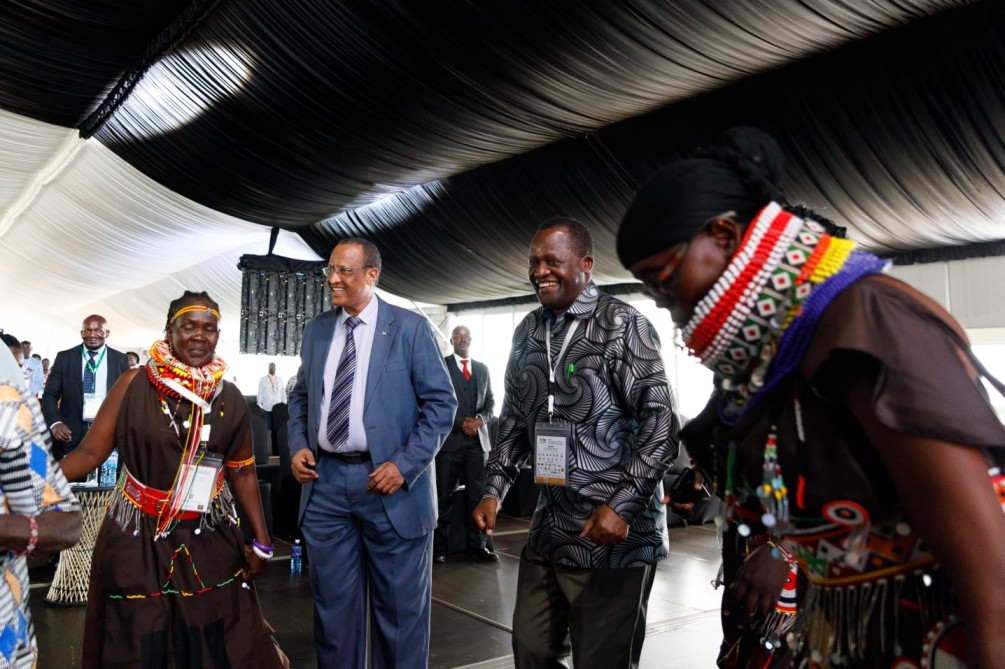
The high-level summit, currently underway at Thika Greens Golf Resort, has brought together leaders, investors, and community representatives from 13 pilot counties to explore how traditional knowledge can be transformed into viable economic assets.
Speaking at the event, Garissa Governor Nathif Jama, representing the Council of Governors, challenged stakeholders to move beyond documentation and embrace commercialization.
“Documentation without investment only creates archives, and digitization without commercialization leaves value unrealized,” he said.
The conference signals a strategic shift toward monetizing indigenous knowledge across several key sectors. These include scaling traditional medicine into pharmaceutical-grade products, standardizing local cuisines for global hospitality markets, and protecting as well as exporting Kenyan creative arts and technologies.
To support this transition, several state agencies have stepped in to provide structure and credibility. The Kenya Copyright Board is spearheading the protection of community intellectual property rights, while the Kenya Bureau of Standards is overseeing product standardization to meet international export requirements. Financing support is being facilitated by the Kenya Industrial Estates.
Organizers are also tapping into the Kenyan diaspora to help bridge global markets, ensuring communities benefit directly through royalties and economic returns from their cultural assets.
The initiative involves 13 pilot counties, including Marsabit, Turkana, Garissa, Mandera, Wajir, Samburu, Isiolo, Kilifi, Makueni, Tana River, Kakamega, Kericho, and Narok. These regions have already documented heritage-based assets ready for commercialization.
According to organizers, the conference has identified more than 25 investment opportunities and over 40 indigenous knowledge assets across sectors such as traditional medicine, indigenous technologies, and cultural tourism.
Investors are being encouraged to partner with counties to develop these assets into bankable ventures, supported by frameworks that ensure intellectual property protection, quality assurance, and structured project documentation.
The trade fair, which runs through April 23, is expected to culminate in concrete partnerships aimed at transforming Kenya’s “ancient wisdom” into a modern economic driver, positioning the country as a leader in culturally grounded innovation and sustainable development.