



By Erestinah Jane, June 30, 2026
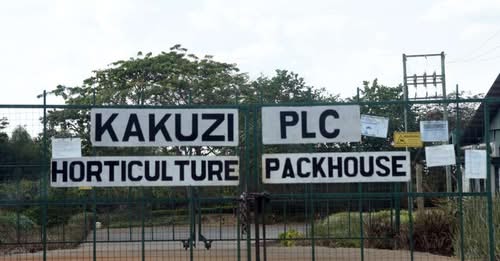
Kakuzi PLC has moved to the Court of Appeal in a bid to overturn a landmark judgment requiring the agribusiness company to surrender thousands of acres of land following findings of historical land injustices by the National Land Commission (NLC).
The listed company is challenging an April 2026 decision by the Environment and Land Court (ELC), which dismissed its application seeking to quash the NLC’s directive requiring the firm to allocate part of its vast estate to landless residents in Murang’a County.
The appeal marks the latest phase in a long-running legal dispute over ownership and historical land claims dating back to the colonial period.
In its appeal, Kakuzi argues that the Environment and Land Court misinterpreted the Constitution by concluding that the National Land Commission has powers to compel the surrender of privately owned land.
The company maintains that while the commission has authority to investigate historical land injustices, it does not possess constitutional or statutory powers to order compulsory acquisition or redistribution of private property without following the legal framework governing compulsory land acquisition.
According to Kakuzi, only the State, acting within the provisions of the Constitution and relevant land laws, can compulsorily acquire private land, subject to due process and prompt compensation.
The company has also accused the NLC of violating principles of fair administrative action during its investigations.
Court documents state that Kakuzi repeatedly requested copies of the commission’s findings, recommendations and final determinations but was allegedly never supplied with the documents before they were published through a Gazette Notice.
The firm argues that the omission denied it an opportunity to adequately respond to allegations, challenge evidence presented before the commission or defend its ownership rights before the recommendations became legally enforceable.
Kakuzi further contends that the disputed land forms a critical part of its commercial operations and supports significant long-term investments.
According to the appeal, the company has invested more than KSh11 billion in infrastructure and agricultural assets across the estate, including avocado and macadamia orchards, biological assets, irrigation systems, dams, roads, machinery, warehouses, processing facilities, offices and residential buildings.
It warns that surrendering approximately 3,200 acrese stimated to represent nearly one-quarter of its productive land—would significantly affect agricultural production, export earnings and future expansion plans.
The company also says the decision could adversely affect the interests of approximately 1,400 local and international shareholders who have invested in the publicly listed firm.
Beyond the immediate dispute, Kakuzi argues that the case carries broader implications for Kenya’s investment climate.
The company cautions that allowing constitutional commissions to order the surrender of titled private land without clear legal authority could undermine investor confidence, particularly in the commercial agriculture sector where large-scale, long-term investments depend on secure land tenure.
According to the firm, uncertainty over property rights could discourage both local and foreign investors from committing capital to Kenya’s agricultural industry.
The dispute stems from a Gazette Notice issued by the National Land Commission in November 2025 after completing investigations into complaints filed by local communities and supported by the Kenya Human Rights Commission (KHRC).
Following the inquiry, the commission concluded that historical land injustices had occurred during the colonial era and directed Kakuzi to surrender approximately 3,200 acres for the settlement of landless families.
The commission also ordered the company to allocate at least 50 acres to the Murang’a County Government for urban development and public utilities.
In addition, the NLC directed Kakuzi to formally regularize parcels of land previously earmarked for schools, public markets, access roads and other community facilities to ensure residents receive legal documentation for public infrastructure already in use.
The Environment and Land Court upheld the commission’s recommendations in April, prompting Kakuzi to escalate the matter to the Court of Appeal.
The appellate court is now expected to determine whether the National Land Commission acted within its constitutional mandate, whether the company’s right to fair administrative action was violated and whether the disputed directives should remain in force pending the final determination of the appeal.
The outcome of the case is likely to have significant implications for the interpretation of Kenya’s historical land injustice framework, the powers of the National Land Commission and the protection of private property rights under the Constitution.