




By Saad Salim ,October 21, 2026
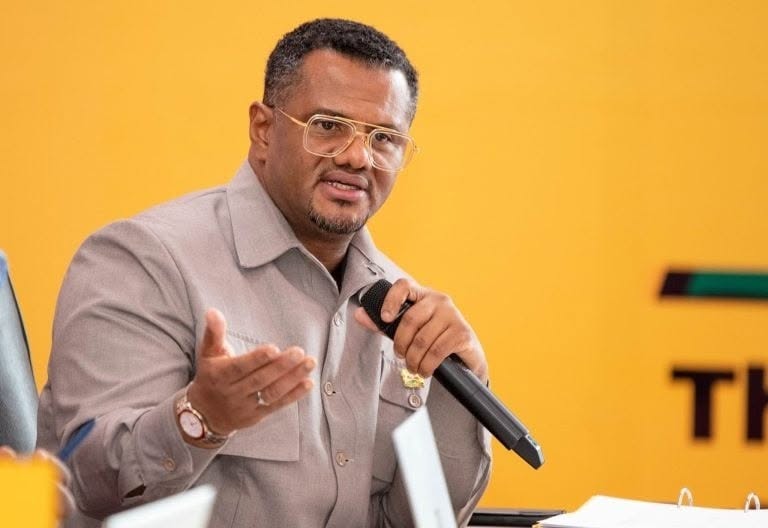
United Democratic Alliance (UDA) Secretary-General Hassan Omar has appeared before the Independent Electoral and Boundaries Commission (IEBC) Electoral Code of Conduct Enforcement Committee following controversial remarks about the use of deceased voters’ fingerprints in the 2027 General Election.
Omar appeared before the committee at Anniversary Towers in Nairobi on Wednesday, October 21, 2026, to respond to concerns arising from statements he allegedly made during a political rally in Jomvu, Mombasa County, on September 11.
The remarks triggered widespread public debate over the credibility of Kenya’s electoral process, the integrity of the voter register and the security of biometric voter identification systems ahead of the next general election.
According to reports surrounding the incident, Omar allegedly suggested that the ruling UDA party would use every possible means to secure victory, including obtaining fingerprints from deceased individuals before burial and using the biometric details to facilitate voting.
The alleged remarks raised concerns among opposition leaders and members of the public, who questioned whether the statement pointed to possible attempts to manipulate the electoral process.
The controversy has renewed calls for greater transparency in the management of the voter register and stronger safeguards against electoral malpractice.
During his appearance before the IEBC committee, Omar reportedly maintained that his remarks had been taken out of context.
He argued that his comments were intended metaphorically to describe an aggressive grassroots mobilisation strategy aimed at maximising voter participation in support of UDA and President William Ruto.
Omar’s explanation will be considered alongside the allegations as the commission determines whether his remarks violated the Electoral Code of Conduct.
The distinction between political rhetoric and statements that could undermine confidence in an election remains central to the controversy.
The IEBC is examining the matter under the Electoral Code of Conduct contained in the Second Schedule of the Elections Act, 2011.
Section 110 of the Elections Act provides the statutory framework relating to the Electoral Code of Conduct and compliance by political parties and electoral participants.
The code sets standards for responsible political conduct during elections and provides a framework for addressing violations by parties and individuals subject to its provisions.
The commission is expected to assess whether Omar’s statements breached the applicable rules and determine what action, if any, is warranted under the law.
However, the summons itself does not establish that an electoral offence occurred, and any potential sanctions would depend on the applicable legal provisions, the evidence and the outcome of the proceedings.
The controversy has intensified calls from opposition figures for greater scrutiny of the voter register ahead of the 2027 elections.
Opposition leaders have reportedly questioned the implications of the remarks and renewed demands for an independent audit to identify and remove deceased voters from the register in accordance with the law.
They argue that public confidence in the electoral process depends on transparent voter registration procedures, credible safeguards and timely action against any proven electoral misconduct.
The demands also place renewed attention on the IEBC’s preparations for the next general election and its ability to demonstrate that electoral systems remain secure and impartial.
Specific statements and demands attributed to individual opposition leaders should be verified against their original public remarks before publication.
The alleged remarks have also prompted reported criticism from figures associated with the ruling coalition.
Concerns have centred on the potential damage such statements could cause to public confidence in the electoral process, regardless of whether they were intended literally or figuratively.
The controversy has also unfolded amid reported internal disagreements within UDA, including calls by a faction of lawmakers for Omar to resign over separate allegations concerning ethnic profiling.
Those allegations are distinct from the IEBC proceedings and should be treated as a separate matter unless a direct connection is established through verified statements or official records.
The Second Schedule of the Elections Act, 2011, contains the Electoral Code of Conduct, which governs the behaviour of political parties, candidates and other participants covered by the code.
Section 110 addresses the legal framework for subscribing to and complying with the code.
Depending on the findings, the IEBC may take action available under the applicable electoral laws and enforcement procedures. Any criminal liability, disqualification or other penalty would require a specific legal basis and satisfaction of the relevant legal requirements.
It is therefore important to distinguish a possible breach of the Electoral Code of Conduct from a proven criminal offence. The precise statutory provisions applicable to any alleged offence would need to be established from the evidence and the relevant legislation.
The controversy has renewed public interest in the security of Kenya’s biometric voter registration and identification systems.
Biometric technology is intended to support voter identification and help protect the integrity of elections. However, the effectiveness of electoral safeguards also depends on accurate voter records, appropriate verification procedures and the proper implementation of election laws.
The IEBC’s handling of the matter will be closely watched as preparations for the 2027 General Election continue.
The commission’s findings could influence public discussion about voter registration, political accountability and the measures needed to strengthen confidence in the electoral process.
The key question is whether the IEBC committee will conclude that Omar’s remarks violated the Electoral Code of Conduct or determine that the available evidence does not establish a breach.
As of the date of this article, the final outcome of the committee proceedings should be confirmed through an official IEBC statement before any verdict or sanction is reported.
The case highlights the importance of responsible political communication and the need for electoral institutions to address allegations through transparent, evidence-based procedures.
With the 2027 General Election approaching, the controversy is likely to remain part of the broader national debate over electoral credibility, political accountability and the integrity of Kenya’s democratic process.


