


By Joshua Otieno | May 14, 2026
NAIROBI, KENYA — The Government has unveiled sweeping reforms in Kenya’s higher education sector, highlighting a surge in university enrollment, expanded digital learning opportunities, reduced tuition costs, and increased funding aimed at transforming access to quality education across the country.
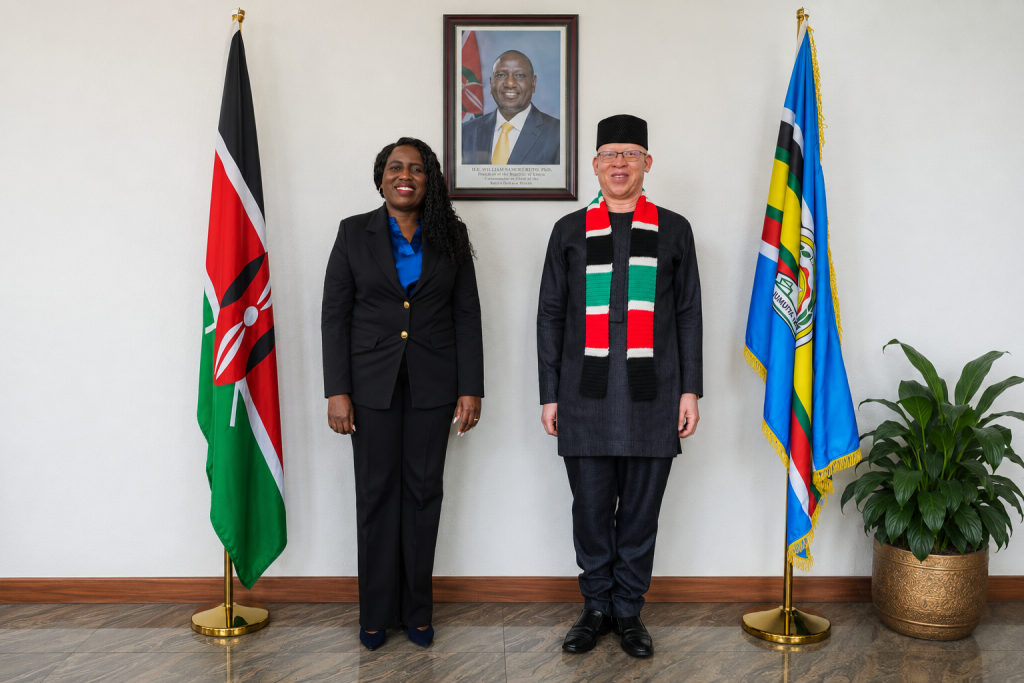
Speaking during Episode 28 of Sema na Spox: Bonga na Gava held at Harambee Annex in Nairobi on Wednesday, Government Spokesperson Hon. Isaac Mwaura hosted Principal Secretary for Higher Education Dr. Beatrice Inyangala in a wide-ranging discussion on university funding reforms, CBC transition preparations, research growth, and expanding access to learning.
Dr. Inyangala revealed that university enrollment has now reached approximately 670,000 students across both public and private institutions, reflecting growing confidence in higher education as a pathway to employment and economic empowerment.
“Courses such as medicine, nursing, ICT, law and education continue to attract the highest number of students because the world today needs professionals who can adapt to changing economies,” she stated.
The PS noted that the Open University of Kenya has rapidly emerged as a global digital learning platform, currently hosting nearly 24,000 learners from 54 countries. According to the ministry, 9,000 students are pursuing full degree programs while another 15,000 are enrolled in short professional courses.
“The Open University has become a game changer for working adults, parents, and many Kenyans who missed university opportunities earlier in life,” Dr. Inyangala said. “It is giving thousands a second chance through flexible online learning.”
The Government also defended the student-centered university funding model, saying the revised system has significantly eased the financial burden on families by allocating scholarships and loans directly to students based on their level of need.
Dr. Inyangala noted that university fees have reduced by between 15 and 40 percent depending on household income and course requirements.
“Some vulnerable students pursuing Bachelor of Arts programs are now paying as little as KSh 5,814 per semester,” she revealed.
The State Department for Higher Education further announced that universities currently have the capacity to admit all qualified students this year. Institutions collectively have space for approximately 323,000 learners, while eligible university candidates stand at around 268,000.
On research and innovation, the PS disclosed that Kenyan universities secured nearly KSh 11 billion in additional funding during the last financial year, with KSh 8.5 billion generated directly from research activities and innovation partnerships.
Universities were also challenged to move away from theory-based teaching and adopt practical, competency-driven learning models aligned with the modern job market.
“Employers today are looking for graduates who can solve problems, innovate and adapt—not just memorize content,” Dr. Inyangala emphasized.
The Government confirmed that preparations are already underway for the transition of Competency-Based Curriculum (CBC) learners into universities beginning in 2029. Institutions are currently reviewing academic programs, retraining lecturers, and assessing infrastructure readiness for practical and creative learning.
In addition, the ministry reported that university funding has increased from KSh 62 billion in 2022 to KSh 94 billion this year—a 52 percent rise under the new higher education financing framework.
More than 835,000 students have so far benefited from scholarships and loans under the revised funding structure, according to the ministry.
Dr. Inyangala further stressed that technology integration must extend beyond ICT courses, noting that sectors such as agriculture, medicine, engineering, business, and the arts are increasingly driven by digital systems.
“Digital literacy is now essential in every profession,” she said. “Graduates with technological skills will have a stronger competitive advantage both locally and internationally.”
The discussion underscored the Government’s broader push to expand inclusive education, strengthen innovation, and align university training with Kenya’s future economic and workforce demands.