


By Fridah Mbuvi | June 10, 2026
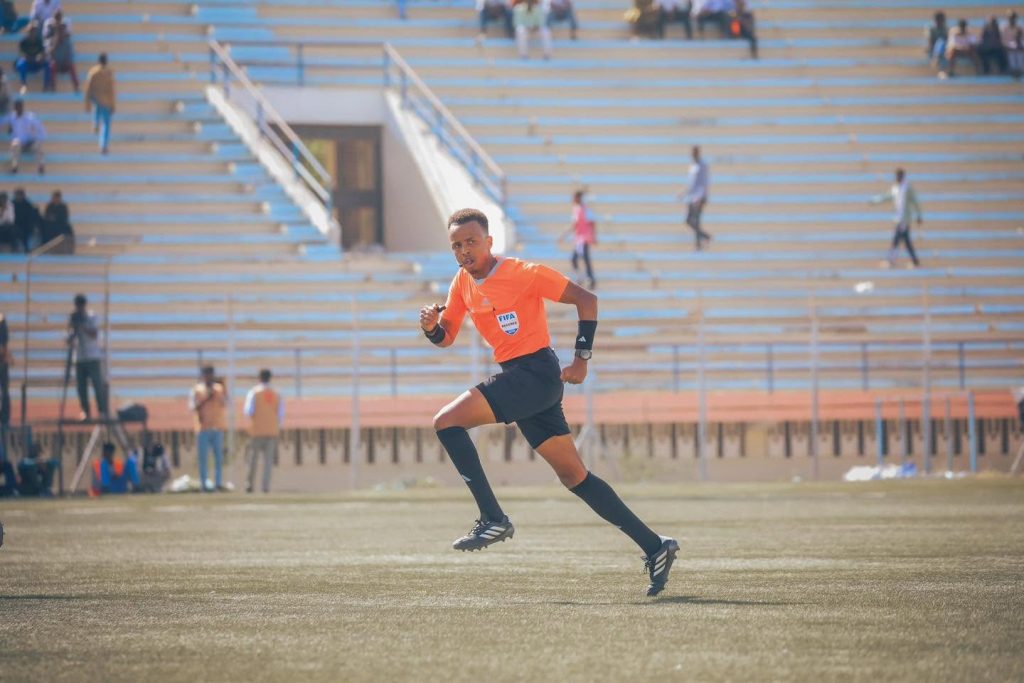
Award-winning Somali referee Omar Artan has been removed from the officiating roster for the 2026 FIFA World Cup after U.S. immigration authorities denied him entry upon arrival in Miami, dealing a major blow to one of African football’s most respected match officials.
Artan, 34, who was crowned the Confederation of African Football (CAF) Men’s Referee of the Year in 2025, had traveled from Istanbul to the United States to attend a mandatory FIFA pre-tournament seminar ahead of the expanded World Cup.
However, despite possessing a diplomatic passport, a valid single-entry U.S. visa and official FIFA accreditation documents, the referee was stopped by officers from U.S. Customs and Border Protection (CBP) at Miami International Airport.
According to reports, Artan was subjected to an extensive screening process that lasted approximately 11 hours. During the interrogation, authorities reportedly questioned him about his travel history, Somali politics and possible links to the al-Shabaab militant group.
Despite presenting documentation confirming his role as a FIFA-appointed match official, immigration officers maintained that he was inadmissible to the country.
Following the lengthy questioning, Artan was held in an airport detention facility before being placed on a return flight to Istanbul, effectively ending his participation in the World Cup.
The Department of Homeland Security later confirmed that Artan had been found “inadmissible due to vetting concerns,” although officials declined to disclose specific intelligence or evidence behind the decision.
A senior U.S. official subsequently indicated that the concerns were related to suspected links to terrorism, allegations that Artan has strongly rejected.
The referee reportedly attributed the incident to discrimination and systemic bias directed at Somali nationals, arguing that his professional record and international credentials should have been sufficient to guarantee his entry.
The controversy comes against the backdrop of tightened immigration measures under President Donald Trump’s administration, which has maintained strict vetting procedures and travel restrictions affecting several countries, including Somalia.
FIFA confirmed that Artan would miss the tournament but emphasized that visa and immigration decisions fall under the authority of host governments.
“Host countries retain sovereign authority regarding entry requirements and visa decisions,” the governing body said in a statement.
The Somali government condemned the move and launched diplomatic efforts aimed at reversing the decision.
Officials from Somalia’s Ministry of Youth and Sports described the exclusion as contrary to the principles of fairness and merit that underpin international sporting competitions.
“This decision undermines the spirit of fair play and deprives one of Africa’s finest referees of the opportunity to officiate at football’s biggest stage,” a ministry official said.
Artan’s exclusion has also renewed concerns over the impact of immigration restrictions on international sporting events.
Reports indicate that members of Iran’s national team management staff have also faced entry difficulties, while Iraqi striker Aymen Hussein was reportedly detained for several hours before eventually being allowed into the country.
Artan has emerged as one of Africa’s most accomplished referees in recent years, earning praise for his performances in CAF competitions and international tournaments.
His appointment to the World Cup had been viewed as a milestone for Somali football and a source of pride for the Horn of Africa nation, which has long struggled with political instability and security challenges.
The incident is expected to trigger wider debate about the intersection between national security policies and global sporting events, particularly as the United States co-hosts the 2026 FIFA World Cup alongside Canada and Mexico.
For Somalia, the decision represents not only the loss of a prestigious World Cup assignment but also a painful setback for a referee whose rise had become a symbol of hope and progress for the country’s sporting community.