



By Mumo Judah | July 20, 2026
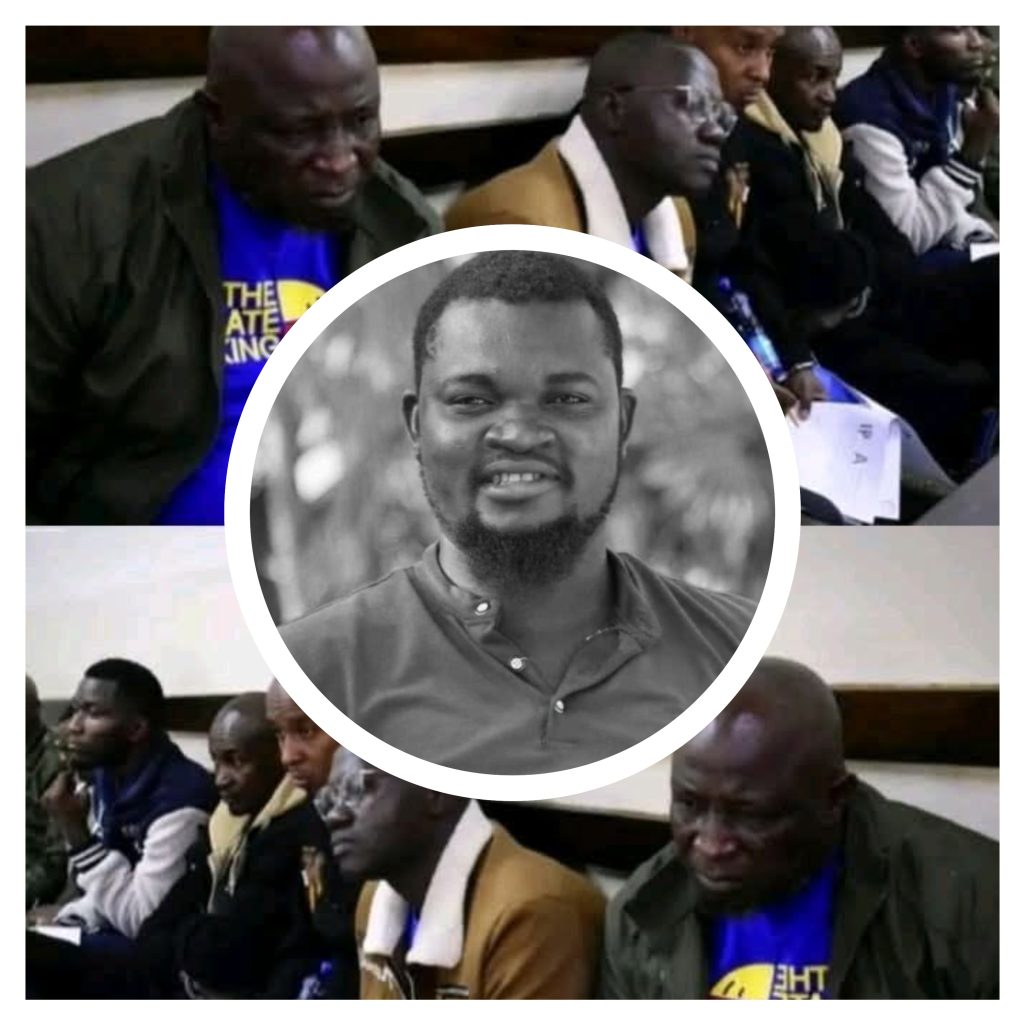
The murder trial of teacher and blogger Albert Ojwang officially commenced, with the Office of the Director of Public Prosecutions (DPP) outlining the key issues it intends to prove in its bid to secure convictions against six accused persons charged over his death.
Appearing before the High Court, the prosecution told the court it would establish who was responsible for Ojwang’s death, explain how the fatal assault was carried out, and demonstrate how those involved allegedly attempted to conceal the circumstances surrounding the killing.
The DPP maintained that Ojwang’s death was neither accidental nor self-inflicted, but rather the result of a deliberate and coordinated criminal act committed while he was in police custody.
According to the prosecution, Ojwang was arrested and taken to Nairobi’s Central Police Station while alive and in good health before allegedly being subjected to a violent assault inside the station.
The prosecution alleged that the deceased was brutally beaten, tortured and strangled, leading to his death while under the care and protection of law enforcement officers.
State prosecutors informed the court that medical evidence and findings from the post-mortem examination would play a central role in the case.
They argued that the medical reports revealed multiple injuries on different parts of Ojwang’s body, findings they say are inconsistent with the initial police account that he died after allegedly hitting his head against a wall while inside a police cell.
The prosecution contended that the injuries documented by pathologists point to sustained physical assault rather than self-inflicted harm.
In support of its case, the DPP called its first witness, a forensic expert specializing in closed-circuit television (CCTV) systems.
The witness testified that the Digital Video Recorder (DVR) connected to surveillance cameras in the Officer Commanding Station (OCS) office had been manually formatted, resulting in the deletion of crucial footage that investigators believe could have captured events surrounding Ojwang’s detention.
According to the prosecution, the deletion of the surveillance recordings was part of an elaborate attempt to conceal evidence and obstruct investigations into the death.
The DPP argued that the alleged destruction of digital evidence demonstrates a coordinated effort to interfere with the course of justice following the incident.
The accused persons include former Central Police Station Officer Commanding Station (OCS) Samson Talaam, two police constables and three civilian suspects who were reportedly held in the same police cells as Ojwang.
The prosecution alleged that all six acted jointly in an unlawful enterprise that ultimately resulted in the death of the teacher and blogger.
State prosecutors further submitted that police officers have a legal obligation to ensure the safety and welfare of every individual held in custody, adding that any breach of that duty resulting in death carries serious criminal consequences.
They argued that the accused failed in their constitutional and legal responsibility to protect a person under state custody.
The defence is expected to challenge the prosecution’s evidence as the trial progresses, with the court scheduled to hear testimony from additional witnesses, including forensic experts, investigating officers and medical professionals involved in the case.
The death of Albert Ojwang sparked widespread public outrage across the country, prompting demands from civil society organizations, political leaders and human rights groups for an independent investigation and accountability for those responsible.
The case has also renewed national debate on police accountability, the treatment of suspects in custody and the protection of constitutional rights within Kenya’s criminal justice system.
As the trial continues, the High Court is expected to hear extensive forensic, medical and digital evidence aimed at determining the circumstances surrounding Ojwang’s death and whether the prosecution can prove the charges against the accused beyond reasonable doubt.