



By Mumo Judah, Nakuru, June 26, 2026
The Directorate of Criminal Investigations (DCI) has officially taken over investigations into the death of Kenya Wildlife Service (KWS) officer Corporal Leonard Odero after a post-mortem examination conclusively ruled out suicide, prompting detectives to reclassify the case as murder.
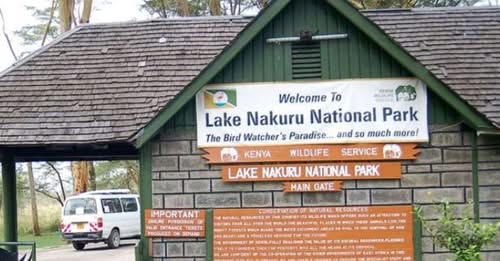
Corporal Odero was found dead inside his government residence within Lake Nakuru National Park on June 23. Initial reports had pointed to a possible suicide after officers recovered his issued service rifle alongside a handwritten note believed to have been addressed to members of his family.
However, findings by government pathologists have dramatically altered the direction of the investigation.
According to the official post-mortem report, the KWS officer sustained six separate gunshot wounds in different parts of his body, injuries that medical experts say could not have been self-inflicted.
The examination established that the deceased suffered two gunshot wounds to the head, one through the mouth, one to the chest, one to the upper left arm, and another to the left palm.
Investigators say the distribution of the wounds, coupled with their severity, makes it anatomically impossible for the officer to have shot himself multiple times, effectively dismissing the earlier suicide theory.
The findings prompted the DCI Homicide Unit to immediately assume control of the investigation from local police as detectives began treating the scene as a suspected homicide.
Crime Scene Investigation (CSI) officers revisited the officer’s residence on Thursday to conduct an extensive forensic examination aimed at reconstructing the events leading to his death.
Investigators collected additional ballistic evidence, documented bullet trajectories inside the house, dusted the premises for fingerprints, and secured the officer’s firearm as a key exhibit in the investigation.
Police also recovered several spent cartridges from inside the residence, which have been forwarded for ballistic examination to establish whether all the bullets were discharged from the recovered service rifle or if another firearm may have been involved.
The rifle recovered at the scene was identified as a CZ Bren 2 assault rifle that had been officially issued to Corporal Odero for operational duties.
Records indicate that he had also been issued three magazines, each loaded with 25 rounds of 7.62-millimetre ammunition before reporting for duty.
Detectives are now conducting detailed forensic examinations on the weapon, including fingerprint analysis, DNA sampling, and gunshot residue tests, to determine who handled the firearm before the officer died.
The handwritten note recovered from the house has also become a central piece of evidence.
Although the letter reportedly contained personal instructions directed to close family members, forensic document examiners have begun conducting handwriting authentication tests to determine whether Corporal Odero authored it voluntarily or whether it may have been forged or written under coercion.
Investigators are also examining the ink, paper, and writing sequence to establish when the note was prepared relative to the time of death.
Sources close to the investigation say detectives are not ruling out the possibility that the note may have been deliberately planted to mislead investigators into believing the death was self-inflicted.
Attention has also shifted to the officer’s recent movements and professional assignments.
Police records show that Corporal Odero had only been deployed to Lake Nakuru National Park approximately six weeks before his death after being transferred from Aberdare National Park.
Detectives are now reviewing his recent work assignments, communication records, and interactions with colleagues to establish whether he may have encountered threats before his death.
Investigators have begun recording statements from fellow KWS officers, neighbours, supervisors, family members, and individuals believed to have interacted with the deceased during his final days.
Detectives are also reviewing mobile phone records, electronic communication, and CCTV footage from areas surrounding the residential quarters to reconstruct his final movements before the fatal shooting.
The officer’s body remains preserved at Umash Funeral Home in Nakuru awaiting completion of investigations and further forensic procedures.
Authorities have appealed to anyone with information that may assist investigators to come forward as homicide detectives continue working to establish the motive behind the killing and identify those responsible.
The case is now being treated as one of the most significant homicide investigations involving a serving Kenya Wildlife Service officer in recent years, with investigators expected to rely heavily on forensic evidence to determine exactly what transpired inside the officer’s residence.