



By Erestinah Jane October 28, 2026
Chief Justice and President of the Supreme Court Martha Koome has called on the Judiciary to strengthen its preparedness for resolving electoral disputes ahead of Kenya’s 2027 General Election, warning that delays in handling election-related cases could undermine public confidence in the electoral process and constitutional stability.
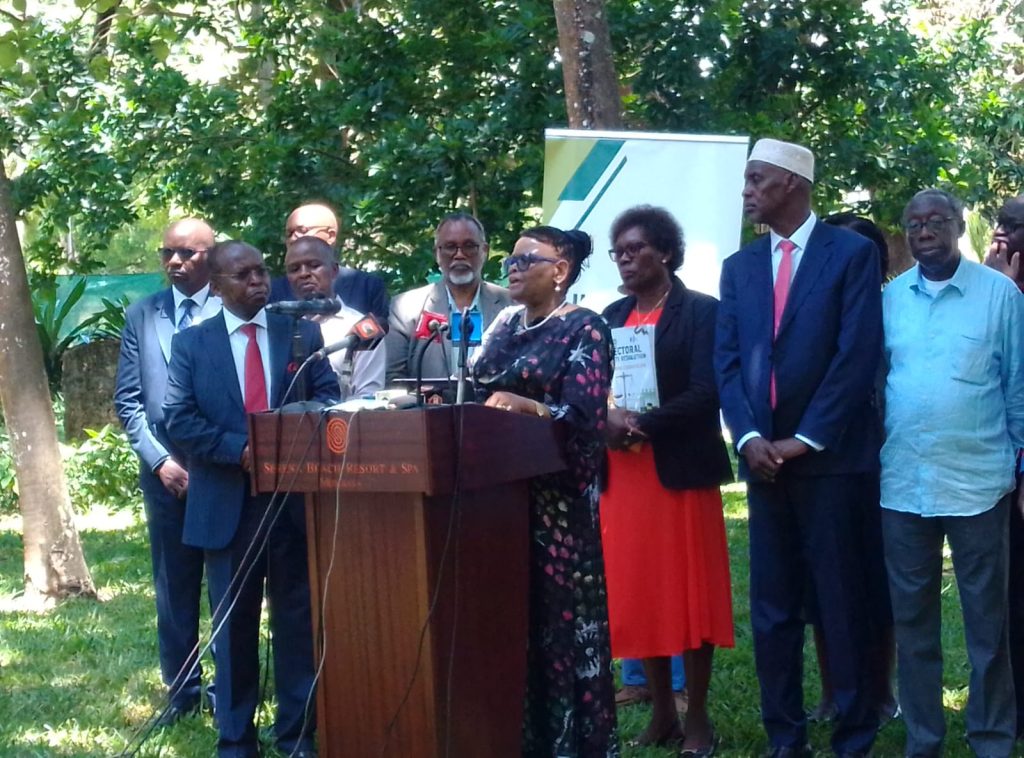
Speaking during the opening of the High Court Judges’ Training on Election Dispute Resolution on Wednesday, October 28, 2026, Koome said timely and effective determination of electoral disputes was essential to safeguarding justice and ensuring peaceful elections.
The training, organised by the Judiciary Committee on Elections (JCE) in collaboration with the Kenya Judiciary Academy (KJA), seeks to prepare judges and other judicial officers to handle disputes arising before, during and after the 2027 General Election.
“Timeliness in electoral dispute resolution is an essential element of electoral justice and constitutional stability,” Koome said.
Kenya will hold its fourth general election under the 2010 Constitution in 2027, following the elections conducted in 2013, 2017 and 2022. Koome said the experience gained from previous electoral cycles should guide the Judiciary in strengthening its handling of disputes and improving the administration of electoral justice.
She noted that election disputes require careful preparation, effective case management and adherence to constitutional timelines to ensure that parties receive justice without unnecessary delays.
The Chief Justice also emphasised the need to improve the resolution of pre-election disputes, including disagreements arising from political party nominations and questions concerning candidates’ eligibility to contest for elective positions.
According to Koome, some of these disputes have previously persisted until close to election day, creating uncertainty for candidates, political parties, voters and electoral administrators.
She said resolving such matters promptly would help prevent last-minute disruptions and allow the Independent Electoral and Boundaries Commission (IEBC) to prepare for elections without avoidable legal uncertainty.
Koome further warned against the threat posed by political violence, intimidation and the disruption of political meetings as the country approaches the election period.
She expressed concern over organised political goonism and inflammatory political rhetoric, saying such practices threaten democratic participation and the constitutional principles governing elections.
Article 81(e) of the Constitution requires elections to be free and fair and conducted through a process that is free from violence, intimidation, improper influence and corruption.
The Chief Justice said the Judiciary had a responsibility to uphold the rule of law and ensure that electoral disputes were handled in accordance with the Constitution and the law. She also underscored the importance of enforcing the Electoral Code of Conduct and the Election Offences Act, 2016, to promote accountability and protect the integrity of the electoral process.
Koome said the Judiciary must remain prepared to deal with electoral offences and disputes impartially, ensuring that all parties have access to justice regardless of their political affiliations or influence.
She also highlighted the growing complexity of election-related cases in an increasingly digital environment, where technology, electronic records, artificial intelligence and digital communications can play a significant role in electoral processes and court proceedings.
The Chief Justice said judicial officers must be adequately equipped to assess digital evidence and distinguish credible information from speculation and misinformation.
She noted that the spread of false information, particularly during politically sensitive periods, could complicate electoral disputes and increase tensions among political actors and members of the public.
Koome said judges must therefore approach digital evidence with the necessary legal knowledge and technical understanding while ensuring that decisions are based on credible evidence and established legal principles.
The training is part of the Judiciary’s preparations to strengthen the capacity of judicial officers ahead of the 2027 elections. It is intended to enhance their understanding of electoral law, improve case management and promote consistency in the determination of election petitions.
The programme is expected to reach more than 400 judges, judicial officers and other relevant Judiciary personnel, while a train-the-trainer component will help strengthen the transfer of knowledge across the institution.
The Judiciary is also working to ensure that the systems required to receive and process election-related cases remain reliable during the election period. Effective filing procedures, adequate logistical support and technological readiness are considered important in ensuring that disputes are handled within the timelines provided by law.
Koome emphasised that access to justice must be protected even when technical challenges arise, particularly given the strict timelines that govern the resolution of electoral disputes.
She said the Judiciary’s preparedness would be measured not only by the knowledge of its judicial officers but also by its ability to provide an accessible, efficient and impartial dispute-resolution process.
The Chief Justice urged judicial officers participating in the training to use the opportunity to strengthen their expertise and readiness to handle the legal and practical challenges likely to emerge during the 2027 electoral cycle.
She said public confidence in elections depended partly on the ability of institutions to resolve disputes fairly, independently and within the time required by law.
As political activity intensifies ahead of the polls, the Judiciary is expected to play a critical role in ensuring that disagreements are addressed through lawful channels rather than violence or intimidation.
Koome said a well-prepared Judiciary would be essential in protecting constitutional order, safeguarding the rights of electoral participants and supporting peaceful democratic competition in the 2027 General Election