



By Doris Moraa | July 20, 2026
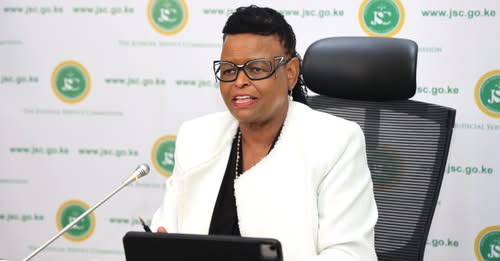
Chief Justice Martha Koome has reaffirmed the Judiciary’s commitment to Alternative Dispute Resolution (ADR), saying mediation is transforming Kenya’s justice system by offering practical, human-centred solutions that preserve relationships while reducing the burden on courts.
Speaking on the growing success of Court-Annexed Mediation (CAM) and the Alternative Justice Systems (AJS), the Chief Justice noted that while court judgments determine legal rights and obligations, they do not always resolve the underlying conflicts between parties.
She observed that many litigants who successfully obtain court judgments often encounter fresh challenges during the execution stage, where aggressive enforcement measures such as the attachment and auction of property can deepen hostility, damage personal and business relationships, and prolong disputes.
According to Justice Koome, mediation provides an opportunity for parties to return to the negotiating table even after a court has delivered its judgment.
She explained that through post-judgment mediation, debtors and creditors are able to negotiate mutually acceptable payment arrangements, including structured instalment plans, enabling legal obligations to be fulfilled without resorting to confrontational enforcement measures.
The Chief Justice emphasized that such negotiated settlements not only ensure compliance with court orders but also promote reconciliation, preserve relationships and encourage long-term social harmony.
“Mediation enables people to resolve disputes in a manner that restores relationships instead of destroying them. Justice should not only produce winners and losers but should also create lasting peace between parties,” she said.
Justice Koome revealed that the Judiciary’s investment in mediation has yielded significant results, with more than 24,000 cases successfully resolved through Court-Annexed Mediation since the programme was introduced.
She noted that the successful settlement of these disputes has unlocked billions of shillings that would otherwise have remained tied up in prolonged litigation, allowing businesses, institutions and individuals to redirect resources toward productive economic activities.
The Chief Justice described mediation as a critical tool in reducing case backlogs while improving access to justice through faster, less expensive and less adversarial dispute resolution mechanisms.
She further highlighted the Judiciary’s decision to introduce mandatory mediation in selected family-related disputes, including succession, matrimonial and burial cases.
According to Justice Koome, such disputes often involve close family members whose relationships can suffer irreparable damage when disagreements are litigated through lengthy court battles.
She said mediation provides families with a confidential and respectful platform to resolve emotionally charged disagreements while preserving family unity and dignity.
The Judiciary has also continued expanding Alternative Justice Systems and professional mediation services across all 47 counties, bringing dispute resolution closer to communities and reducing the need for prolonged court proceedings.
Justice Koome noted that decentralizing mediation services has made justice more accessible, particularly for ordinary Kenyans who may lack the financial resources to sustain lengthy legal battles.
She emphasized that justice should not be viewed as the exclusive domain of lawyers and judges but as a public service that empowers communities to resolve conflicts peacefully and efficiently.
The Chief Justice encouraged legal practitioners, judicial officers and members of the public to embrace mediation whenever appropriate, saying it offers solutions that are often more sustainable than adversarial litigation.
She added that strengthening Alternative Dispute Resolution aligns with the Judiciary’s broader reform agenda aimed at improving efficiency, enhancing public confidence and ensuring timely delivery of justice.
Legal experts attending the forum echoed the Chief Justice’s sentiments, noting that mediation has significantly reduced court congestion while promoting voluntary compliance with agreements reached between disputing parties.
They observed that many commercial, labour and family disputes are now being resolved more quickly through mediation, saving litigants both time and legal costs.
As the Judiciary continues implementing reforms under the Social Transformation through Access to Justice (STAJ) agenda, Justice Koome reaffirmed that mediation will remain a central pillar in modernizing Kenya’s justice system and promoting a culture of dialogue, reconciliation and peaceful conflict resolution.
She expressed optimism that continued investment in Alternative Dispute Resolution mechanisms would further strengthen public trust in the Judiciary while contributing to national cohesion and sustainable economic growth through the timely resolution of disputes.