



By Mumo Judah | Kiambu County | Friday, May 29, 2026
Religious leaders have called for a major shift in the government’s fiscal approach, urging Parliament to prioritize anti-corruption measures and protect low-income households while considering the Finance Bill 2026.
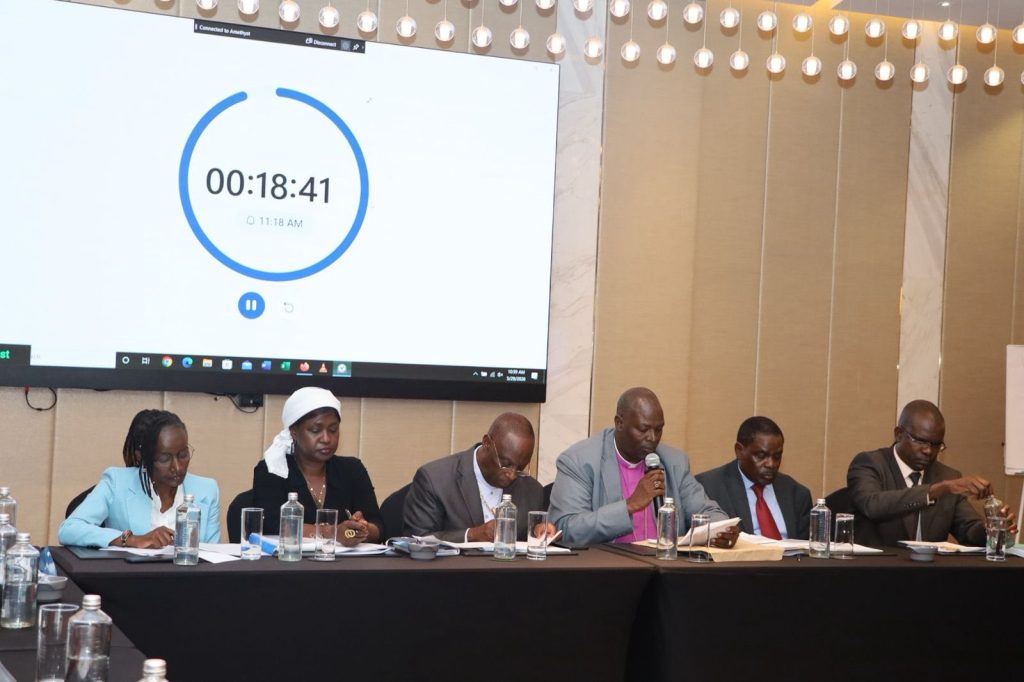
The proposals were presented before the National Assembly Departmental Committee on Finance and National Planning by the Anglican Church of Kenya (ACK) led by Archbishop Dr. Jackson Ole Sapit, alongside representatives from the National Council of Churches of Kenya (NCCK) and the Evangelical Alliance of Kenya.
While acknowledging the government’s constitutional responsibility to raise revenue to support public services, infrastructure development, and debt obligations, the clergy warned against overburdening ordinary Kenyans through increased taxation while billions continue to be lost through corruption and tax leakages.
Archbishop Ole Sapit said taxation should not only be treated as an administrative exercise but also as a moral and social issue that directly affects the dignity and livelihoods of citizens.
The Church urged the government to focus on sealing revenue leakages instead of continuously introducing new taxes. Among the proposals presented were the full digitization of cargo tracking systems, integration of Kenya Revenue Authority systems with shipping lines, and the use of artificial intelligence to detect smuggling and under-invoicing.
The clergy also recommended full implementation of e-procurement systems, public disclosure of awarded tenders and beneficial ownership information, as well as AI-based price benchmarking to curb procurement fraud.
To address financial losses, the Church further proposed tougher penalties for customs fraud, fuel smuggling, and tax evasion among high-net-worth individuals. It also called for stricter lifestyle audits and improved cooperation among government agencies involved in tax enforcement.
Even as they raised concerns, the Church acknowledged several positive proposals contained in the Finance Bill, including the extension of the tax amnesty programme aimed at encouraging compliance.
However, the clergy warned that some measures in the Bill could trigger inflationary pressure and increase the cost of living by passing additional supply chain costs directly to consumers.
The Church maintained that ordinary Kenyans should not continue carrying disproportionate tax burdens while public resources are allegedly lost through inefficiency and corruption.
To cushion vulnerable households, ACK urged lawmakers to maintain the proposal exempting individuals earning below Ksh30,000 from Pay As You Earn (PAYE) tax. The Church also called for lower taxes on essential services in light of the high cost of food, transport, and communication.
The clergy further opposed the proposed increase in excise duty on mobile phones from 10 percent to 25 percent, arguing that smartphones have become critical tools for business, banking, education, and employment, especially among young people.
Responding to the concerns, Committee Chairperson and Molo MP Kuria Kimani clarified that the proposal was intended to harmonize taxes applied to imported mobile phones at the point of activation.
Kimani explained that the Bill also proposes removal of the 2.5 percent Import Declaration Fee and the 1.5 percent Railway Development Levy, which would reduce the overall tax burden on imported phones from 55 percent to 50 percent.
“There is misinformation going round that this provision will end up raising the cost of imported phones. However, the exclusion of the levies result to a 5 per cent overall reduction,” Kimani told stakeholders.
The lawmaker acknowledged concerns surrounding the meaning of the term “point of activation” and assured stakeholders that the Committee would seek clarification from the National Treasury and the Kenya Revenue Authority.
Kimani also cautioned the public against relying on fake versions of the Finance Bill circulating online, insisting that only the official “green Bill” should be referenced during public participation.
The clarification came after concerns were raised over reports alleging that the Bill proposed heavy taxation on imported second-hand clothes, commonly known as mitumba. The Committee clarified that such a provision does not appear in the official draft.
In their final submissions, the Church stressed that public trust remains the most sustainable source of government revenue, arguing that citizens are more likely to comply with taxation when they see transparency, fairness, accountability, and visible development outcomes.
The clergy urged Parliament to ensure the final Finance Bill protects low-income households, supports innovation and entrepreneurship, and prioritizes accountability over punitive taxation measures.