



By Gran Chico | March 10, 2026
In a world where nuclear weapons continue to shape global security dynamics, Africa stands out as a continent that has collectively chosen a different path. Through the African Nuclear-Weapon-Free Zone Treaty, African nations agreed not to develop, acquire, or possess nuclear weapons, making the continent the largest nuclear-weapon-free zone in the world.
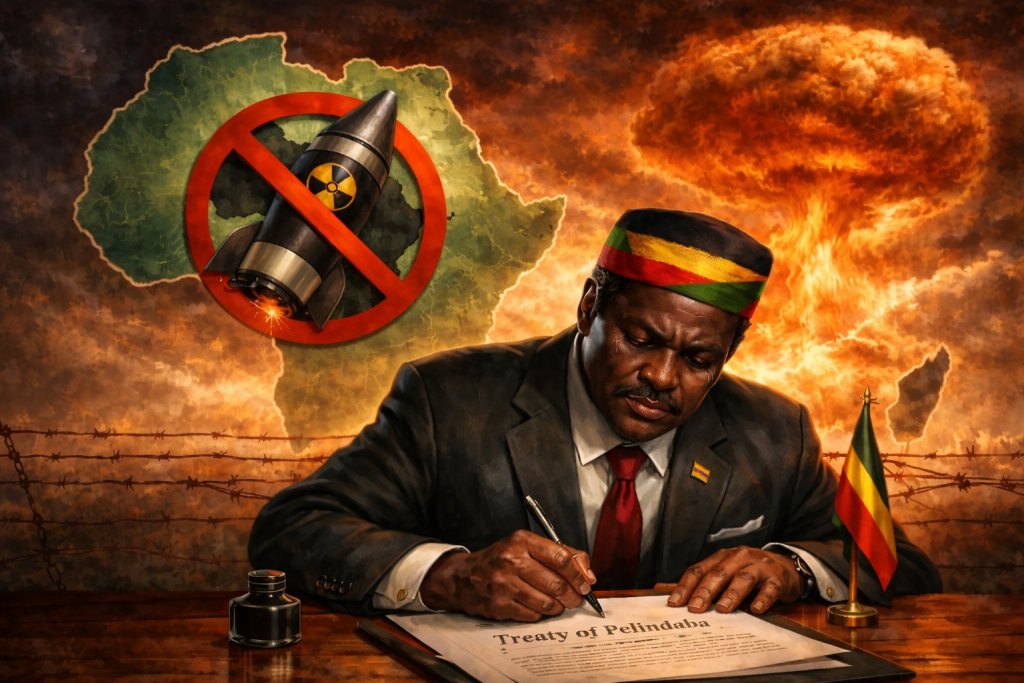
The treaty, commonly known as the Treaty of Pelindaba, was opened for signature on April 11, 1996, in Cairo, marking a major milestone in African diplomacy and commitment to global peace.
A Continental Commitment
Under the agreement, signatory states pledge not to research, develop, manufacture, stockpile, acquire, test, or station nuclear explosive devices anywhere on the continent or on surrounding islands considered part of Africa by the African Union.
The treaty effectively established Africa as a nuclear-weapon-free zone, a decision taken voluntarily by African nations in pursuit of regional stability and sustainable development.
Origins of the Nuclear-Free Vision
The idea of a nuclear-free Africa dates back to 1964, when leaders meeting under the Organization of African Unity in Cairo adopted a declaration calling for the denuclearization of the continent.
This vision was shaped by the desire to prevent nuclear threats on African soil while promoting global disarmament during a time of intense geopolitical tensions.
The treaty itself was adopted on June 2, 1995, at Pelindaba in South Africa, giving the agreement its name. It later entered into force on July 15, 2009, after Burundi became the 28th country to ratify it.
South Africa’s Historic Decision
A crucial moment in Africa’s nuclear story came when South Africa voluntarily dismantled its nuclear weapons programme at the end of the apartheid era.
After developing several nuclear warheads during the 1980s, the country chose to dismantle its arsenal between 1989 and 1990, becoming the first nation in history to completely abandon a self-developed nuclear weapons programme.
South Africa later joined the Treaty on the Non‑Proliferation of Nuclear Weapons in 1991 as a non-nuclear-weapon state, reinforcing the continent’s broader commitment to disarmament.
Peaceful Use of Nuclear Technology
Although nuclear weapons are banned, the treaty encourages African countries to use nuclear technology for peaceful purposes. These include medical treatments such as radiotherapy, agricultural innovations, and clean energy development.
Oversight of the treaty is handled by the African Commission on Nuclear Energy, which works closely with the International Atomic Energy Agency to ensure compliance and promote peaceful nuclear applications.
Looking Ahead
Despite the progress made, some African countries have yet to fully ratify the treaty, highlighting the need for continued cooperation and commitment across the continent.
Even so, the Treaty of Pelindaba remains one of Africa’s strongest collective statements on global peace and security.
At a time when nuclear tensions continue to rise in other parts of the world, Africa’s stance offers a powerful example of how diplomacy, unity, and shared values can shape a safer future.