



By Timothy Nzai | February 23, 2026
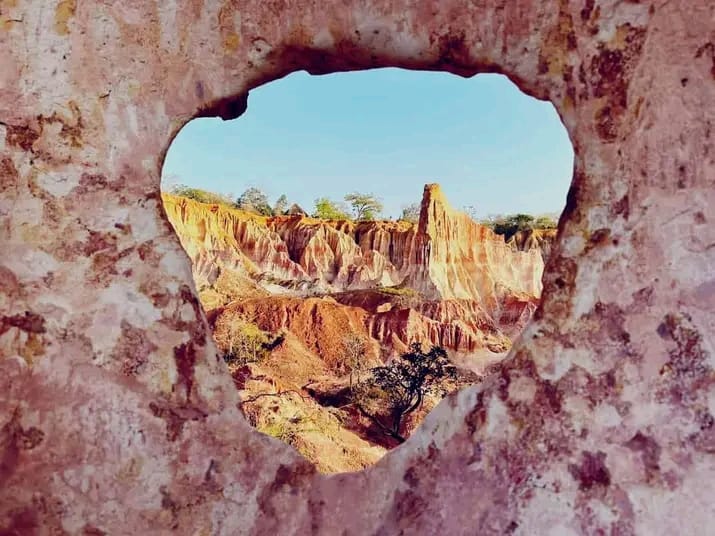
Carved over time by natural forces, Marafa Hell’s Kitchen stands as a striking example of how the environment can shape the land into breathtaking formations. The site was formed through a long process of erosion, driven mainly by wind and rain gradually cutting through soft sedimentary rock.
The region’s climate has played a significant role in this transformation. Marafa experiences hot and dry conditions for much of the year. Intense heat and strong sunlight cause rocks to expand and crack. When rainfall occurs, water seeps into these cracks, further weakening the rock and accelerating erosion over time.
One of the most captivating features of the canyon is its vivid coloration, with layers of red, orange, and white rock. These colors are the result of different minerals within the stone reacting to heat, air, and moisture. This process shows that environmental forces influence not only the shape of the land, but also its appearance.
Human activity has also begun to influence the area. The site attracts many visitors, particularly tourists from nearby Malindi and other coastal towns. While tourism supports local livelihoods, excessive foot traffic can damage the fragile rock formations. Conservation efforts are therefore essential to preserve Marafa Hell’s Kitchen for future generations while allowing communities to continue benefiting from its natural beauty.